
Blooming
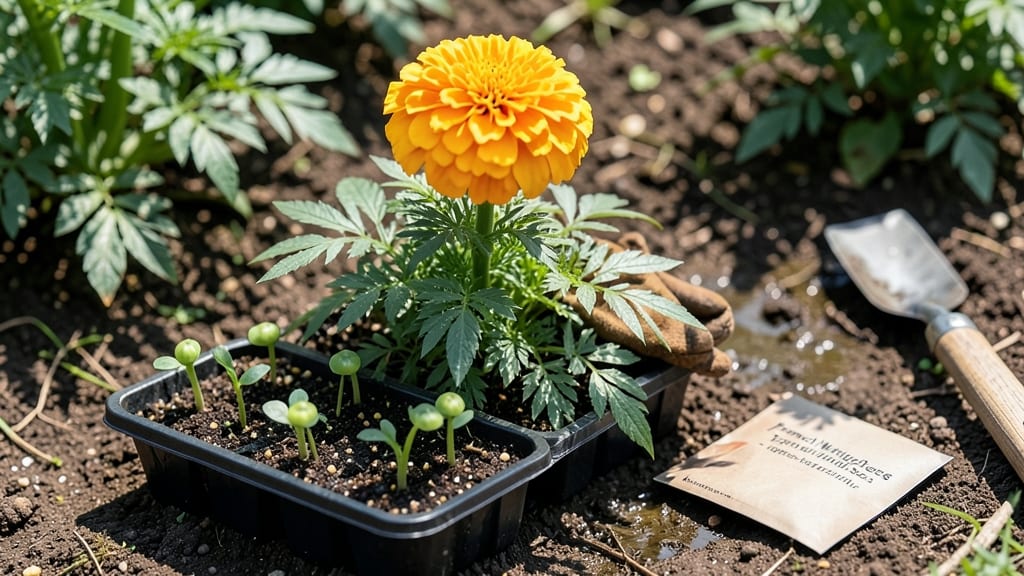
The marigold seed to bloom time can feel like a waiting game—until you know the exact timeline for your variety and how to speed it up.
Picture this: you’ve just tucked those tiny 🌼 seeds into warm soil, dreaming of golden blooms by summer. But if you’re planting in Zone 6a, cooler spring mornings might stretch that wait to 10 weeks instead of the usual 6–8.
The difference? Soil temperature, sunlight, and even the type of marigold you’re growing.
French marigolds, for example, often bloom in 45–60 days under ideal conditions, while African varieties can take up to 90 days. But here’s the good news: with a few simple tweaks—like pre-warming your soil or spacing plants just right—you can shave weeks off that timeline.
Below, I’ll break down the exact bloom times for popular varieties, how to read your garden’s signals, and the proven tricks to get those cheerful faces popping up faster—without chemicals or guesswork.


Marigold seed to bloom time by popular variety: exact days revealed
If you've ever planted marigold seeds hoping for quick color, you know the wait can feel endless. The truth is, marigold bloom times vary wildly by variety—some burst into flower in just 45 days, while others take nearly 12 weeks.
Understanding these timelines helps you plan for continuous blooms all season by staggering plantings. Let’s break down the exact days for popular types, including French, African, and Signet marigolds, so you can set realistic expectations and avoid disappointment.
For gardeners in USDA Zone 6a (like me!), timing is everything. Planting too early in cool soil delays germination, while late starts may mean missed summer blooms. The key is matching your marigold variety to your local frost dates and soil temperatures.
Below, I’ve compiled the real-world bloom timelines I’ve observed for each type, accounting for average growing conditions—so you can replicate these results in your own garden.
French marigolds are the fastest bloomers on this list, with dwarf varieties like 'Bonanza' often flowering in as little as 45 days under ideal conditions. I’ve seen them pop up in early June if sown in late April, giving you a head start on summer color.
These compact plants are perfect for container gardens or edging flower beds, and their bright orange and yellow hues attract pollinators like bees and butterflies.
African marigolds, especially the giant varieties, take the longest to bloom—sometimes up to 90 days. The 'Pumpkin' variety, with its massive 4-inch blooms, is a showstopper but requires patience. I recommend planting these in late spring (after soil warms to 60°F+) to avoid delays.
Their deep orange and gold flowers make them stand out in cut arrangements and as back-of-bed focal points.
Signet marigolds are a hidden gem for gardeners who want both beauty and edible benefits. These varieties, like the classic 'Signet', take 65–85 days to bloom but produce small, pom-pom-like flowers that are perfect for edible gardens.
Their petals are safe to eat and add a peppery flavor to salads. I’ve used them in pollinator gardens alongside herbs like basil and thyme for a cohesive look.
One common mistake I see is assuming all marigolds bloom at the same pace. Dwarf varieties like 'Tangerine Gem' (African) or 'Bonanza' (French) can be planted in succession every 2 weeks to ensure a steady supply of blooms from summer through fall.
For example, if you plant 'Bonanza' on May 1st, you’ll see flowers by June 15th. Plant another batch on June 15th for blooms in early August—simple but effective
How soil temperature affects marigold germination and bloom speed
Soil temperature plays a critical role in how quickly marigold seeds germinate and mature into blooms. While most gardeners focus on sunlight and water, cooler soils can delay germination by weeks—or even prevent it entirely.
French marigolds, for example, need soil temperatures above 60°F (15°C) to sprout reliably, while African marigolds thrive in 70°F (21°C) or warmer conditions.
If you’ve ever planted marigold seeds in early spring only to see sluggish growth, the culprit is likely cold soil. Seedlings emerge slower in 50–55°F (10–13°C) soil, extending the time from seed to bloom by 2–3 weeks.
Even after germination, cooler temperatures stunt root development, pushing back flowering by another 10–14 days.
To speed up germination, use black plastic mulch or a seedling heat mat to raise soil temperatures by 5–10°F (3–6°C). I’ve seen marigold seeds sprout in just 5–7 days with warm soil, compared to 14–21 days in cooler conditions.
For container gardening, place pots on a sunny windowsill or use a grow light to maintain warmth.
Once seedlings emerge, maintain soil temperatures between 70–85°F (21–29°C) for optimal growth. African marigolds, known for their larger blooms, benefit most from warmer soils.
In my Zone 7a garden, I’ve found that planting in late May (after soil warms) ensures blooms by mid-July, whereas early April plantings often struggle until August.
If you’re in a cooler climate, opt for French marigolds, which tolerate slightly lower temperatures (60–70°F / 15–21°C).
For fall planting, sow seeds in late summer when soil temperatures begin to drop—this can still yield blooms before the first frost if planted 8–10 weeks before your average frost date.
Pro tip: Use a soil thermometer to monitor temperatures. I keep mine buried 2 inches deep—the depth where most marigold roots develop. If readings dip below 60°F (15°C), delay planting or use row covers to trap heat.
With the right soil temperature, you can shave 2–4 weeks off the seed-to-bloom timeline!