
Propagation
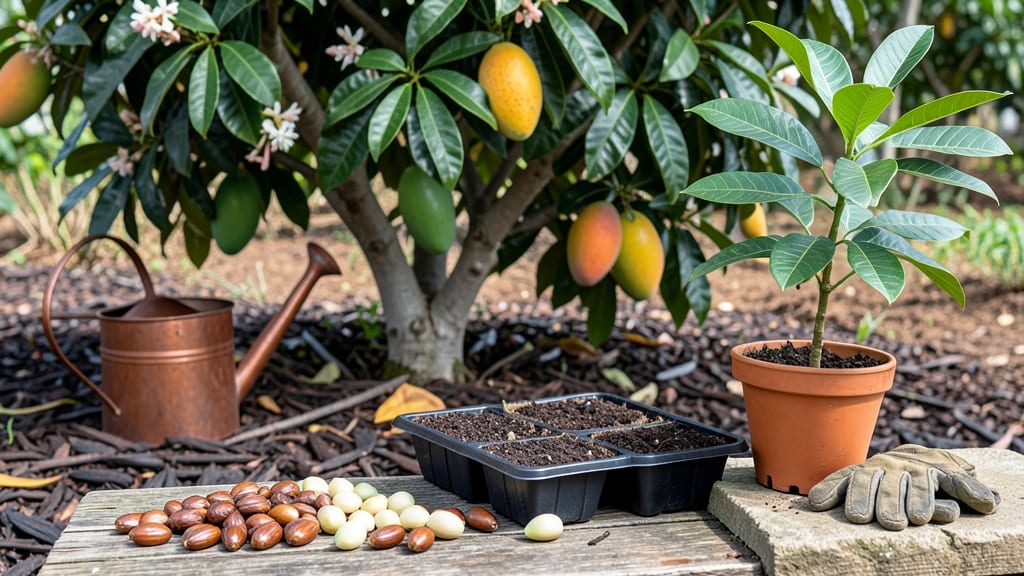
Growing a mango tree from seed to fruit is the ultimate tropical adventure—imagine sun-warmed fruit straight from your own backyard. 🌱 I started mine with a single seed from a grocery store mango, and now it stands tall with glossy leaves and the promise of harvests to come.
The journey takes patience, but the reward of biting into your own homegrown mango makes every step worthwhile.
First, you'll need a warm spot with plenty of sunlight—think 8+ hours of direct light daily—and a container with drainage. Mango seeds germinate best in moist, well-draining soil at temperatures above 70°F, so if you're in a cooler climate, consider starting indoors near a sunny window.
Within 2-4 weeks, you'll see that first sprout, a sign your tropical dream is on its way.
By year three, your tree might start flowering, but don’t rush—it can take 5-7 years for a seed-grown mango to bear fruit. The key is consistent care: water deeply but let the soil dry slightly between waterings, and fertilize lightly during growing seasons.
With time, you'll watch buds form, then blossoms, and finally, the sweet, fragrant promise of your own mangoes.
Even if fruit takes years, the journey is half the joy. My tree’s first blossoms were a thrilling surprise, and while not every flower becomes fruit, each step teaches you more about this resilient tropical plant.
Whether you're in a warm climate or a container on a patio, this adventure is worth every moment of waiting.
📚 In This Guide
- What you need
- Instructions
- Tips and common mistakes
- Wrapping up and next steps
What you need
- ● Mango seed: A fresh, plump seed from a ripe, organic mango (avoid hybrid or grafted varieties—they may not produce true fruit).
- ● Potting mix: 1 bag (5-10 lbs) of well-draining, seed-starting mix (avoid garden soil—it’s too dense).
- ○ Small pots or seed trays: 2-3 (3-4 inches deep) with drainage holes. Optional: Biodegradable peat pots for easy transplanting.
- ● Watering can or spray bottle: With a fine mist nozzle for gentle hydration.
- ● Clear plastic wrap or humidity dome: To create a mini greenhouse effect.
- ● Rubbing alcohol (70% or higher): For sterilizing tools.
- ● Pruning shears or sharp knife: For trimming roots or stems as needed.
- ● Fertilizer: A balanced, water-soluble fertilizer (5-5-5 or 10-10-10 NPK ratio) for young seedlings.
- ○ Gloves (optional): To protect hands from soil and sap.
- ● Warm climate or greenhouse: Mango seeds thrive in USDA Zones 10-11 (or indoors with grow lights).
- ● Sunlight: At least 6-8 hours of direct sunlight daily (use a sunny windowsill or grow lights if indoors).
- ● Patience: Germination can take 2-4 weeks, and fruiting may take 3-5 years!
- ● Space: A large container (15+ gallons) or garden bed (mango trees can grow 30-100 feet tall in tropical climates).
Step-by-step instructions for growing a mango tree from seed
Here's how to transform a single seed into a thriving tropical tree with real fruit.
🌱 Step 1: Extract and Prepare the Seed
Start with a fresh, plump mango seed—never dried or shriveled. Cut open the fruit carefully with a sharp knife, then twist the seed free from the pit. Rinse it under cool water to remove any fruit residue, then pat dry with a paper towel. The seed's outer shell is tough, so I like to gently sand the sides with fine-grit sandpaper until it feels slightly rough—this helps water penetrate later.
Place the seed between two damp paper towels in a sealed plastic bag. Store it in a warm spot (75-85°F) where you can check daily. Within 5-14 days, you'll see the first crack—a tiny root pushing through the shell. That's your signal to move to soil. Real talk: don't rush this step. A seed that's not ready will rot instead of sprout.
🪴 Step 2: Plant the Germinated Seed
Fill a 4-6 inch deep container with well-draining potting mix—mango roots hate soggy soil. I use a blend of 50% potting mix, 30% perlite, and 20% coarse sand to prevent rot. Make a small hole (1-2 inches deep) in the center and place the germinated seed with the root pointing downward. Cover it lightly with soil, leaving just the top visible.
Water gently until moisture reaches 2 inches deep, then place the pot in bright, indirect light (no harsh sun yet). Keep the soil consistently moist but never waterlogged—stick your finger in 1 inch deep to check. If it feels dry, water again. Within 2-4 weeks, you'll see the first true leaves appear. This is the moment that matters: once those leaves unfurl, your seedling is officially a tree.
☀️ Step 3: Transition to Sun and Larger Pot
After the seedling shows 4-6 true leaves, it's time to move it outside. Start with 2-3 hours of morning sun daily, then gradually increase exposure over 2 weeks. Mango trees love full sun but can scorch if moved too fast. You'll notice the leaves darken and thicken as they adapt—this is healthy growth.
When the seedling reaches 12 inches tall, transplant it into a 1-gallon pot with fresh potting mix. Choose a container with drainage holes and place it in a spot with 6+ hours of daily sun. Here's the thing—mango trees grow fast, but they need space. If you're in a warm climate, you can plant it outdoors after 3-4 months, but most growers keep it in containers for at least 2 years to build a strong root system.
✂️ Step 4: Prune and Fertilize for Fruit Production
Once your tree hits 3 feet tall, it's time to shape it. Prune leggy branches back by one-third to encourage bushier growth. Mango trees flower best when they have a balanced shape, so I remove any branches growing inward or crossing others. Use clean, sharp pruners and make cuts just above a leaf node. After pruning, feed the tree with a balanced fertilizer (10-10-10) every 4-6 weeks during growing season.
Patience is key here—most seed-grown mango trees don't produce fruit until 5-10 years old. But you can speed things up by planting it in well-draining, slightly acidic soil (pH 5.0-6.5) and protecting it from frost. If you live in a cold climate, grow it in a large container and bring it indoors before temperatures drop below 40°F. Watch for small, creamy-white flowers in spring—that's your first sign of potential fruit!
Tips & tricks for growing a mango tree from seed
Transforming a mango seed into a fruiting tree takes patience—but these tricks will help you avoid common pitfalls and give your tropical promise the best start.
Seed Preparation: Don't skip the sanding step! The tough outer shell of a mango seed can prevent proper water absorption. I use 220-grit sandpaper to gently rough up the seed's sides—this helps moisture penetrate during germination. Place the seed between damp paper towels in a sealed bag to maintain humidity, and check daily for condensation. If you see mold, open the bag immediately to prevent rot.
Germination Environment: That 75-85°F temperature range is critical for successful germination. If your home stays cooler, place the bag near a sunny window or use a seedling heat mat set to 80°F. The first root should appear within 5-14 days, but don't rush—wait until you see that initial crack before planting. I've seen seeds rot when moved too soon, so patience here pays off.
Soil Mix Matters: Mango roots need excellent drainage to prevent rot. Your 50% potting mix, 30% perlite, 20% coarse sand blend is perfect, but avoid garden soil—it compacts and holds too much moisture. When planting, bury the seed only 1-2 inches deep with the root pointing down. The top should remain visible to prevent decay.
Sunlight Transition: When moving your seedling outside after 4-6 true leaves appear, start with just 2-3 hours of morning sun to avoid sunburn. Gradually increase exposure over 2 weeks—this hardening-off period prevents leaf scorch. Watch for leaves that darken and thicken as they adapt; this is a good sign your tree is adjusting well.
Pro Tips for Mango Tree From Seed To Fruit
- Transforming a mango seed into a fruiting tree takes patience—but these tricks will help you avoid common pitfalls and give your tropical promise the best start.
- Seed Preparation: Don't skip the sanding step!
- Germination Environment: That 75-85°F temperature range is critical for successful germination.
Frequently asked questions
about growing a mango tree from seed to fruit—because every gardener deserves clarity!How long does it take for a mango seed to sprout?
A mango seed typically sprouts within 10–30 days if kept in warm, moist conditions (75–85°F). Patience is key—some seeds take longer, especially if stored improperly. Once the seedling emerges, it’ll need 3–5 years to mature enough for fruit production, so plan ahead!
Can I grow a mango tree indoors?
Yes, but with big limitations! Mango trees thrive outdoors in tropical climates. Indoors, they’ll stay small (under 6 ft) and may never fruit reliably due to light and space constraints. If you try it, place your tree near a south-facing window and supplement with grow lights. Outdoor potting is a better bet for fruit!
Why isn’t my mango tree flowering or fruiting?
Common culprits include:
- Age: Trees under 3–5 years rarely fruit.
- Climate: Mangoes need warmth (60°F+) and dry seasons to trigger blooms.
- Nutrients: Lack of phosphorus/potassium (try a citrus/mango fertilizer).
- Pollination: Hand-pollinate with a brush if no bees are around.
Do mango trees need cold weather?
Not at all! Mango trees hate frost—temperatures below 32°F can kill them. If you live in a cold climate, grow your tree in a container and move it indoors during winter. Young trees are especially vulnerable, so protect them like a tropical princess!
Can I graft a better mango variety onto my seedling?
Seedlings often produce inferior fruit, but grafting a named variety (like ‘Keitt’ or ‘Haden’) onto your seedling’s rootstock can give you sweeter, larger, and more reliable fruit. Just wait until your seedling is 1–2 years old and at least 1 inch thick before grafting. Local nurseries or extension offices can guide you!
Wrapping up and next steps
Growing a mango tree from seed to fruit is a rewarding journey that connects you to nature’s sweetest gifts! 🌱 From nurturing a tiny seed to harvesting your first tropical bounty, every step is a testament to patience and care.
Whether you’re a beginner or a seasoned gardener, this process is totally doable—just embrace the wait and enjoy the magic of watching life unfold.
Ready to take the next step? Start by planting your seed today—your future mango tree is waiting! And if you’re eager to speed up the process, consider grafting or exploring local nurseries for faster-growing varieties. Happy growing! 🌴✨