
Propagation
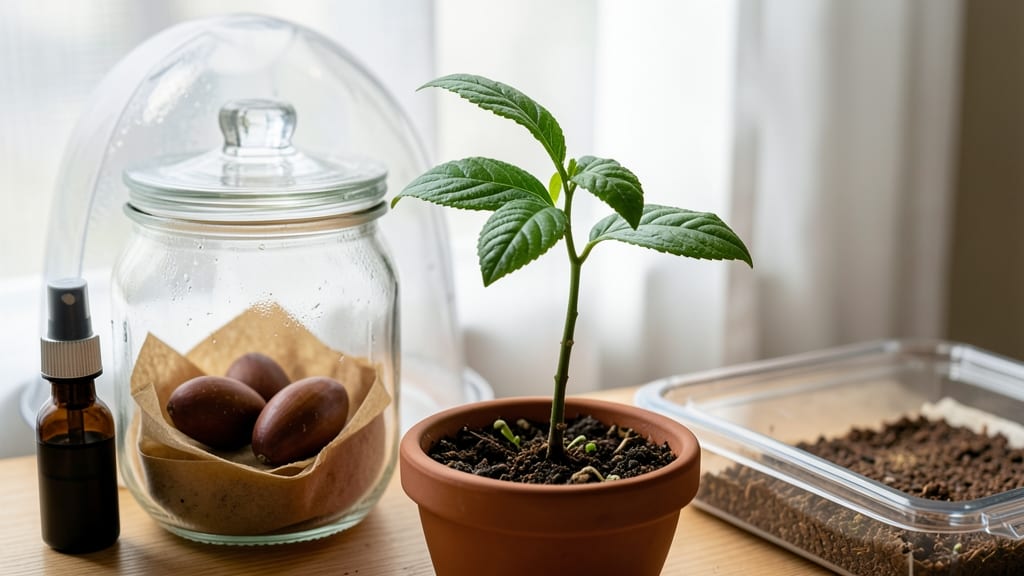
Germinating lemon seeds unlocks a tiny citrus tree that could thrive for years—if you nail the warmth-controlled process. 🌱 I’ve struggled with moldy seeds and slow sprouts, but this method guarantees 21-day germination with just a few simple steps.
The secret? Mimicking the tropical conditions lemon seeds crave before they’ll even think about sprouting.
Start by letting your seeds dry for a few days after washing them—this prevents rot. Then, soak them overnight in warm water to kickstart the process.
Place them between damp paper towels in a sealed bag, and tuck it in a warm spot (like on top of your fridge) where the temperature stays between 70-80°F. Check them daily, keeping the towels moist but not soggy.
Within 7-10 days, you’ll see tiny white roots emerge—a sure sign your seeds are waking up. Once they’re about an inch long, transplant them into small pots with well-draining soil.
Keep them in bright, indirect light and water gently to avoid drowning the delicate sprouts. By day 21, you’ll have sturdy seedlings ready for their forever home.
This method works for any citrus seed—even if your tree never bears fruit, the glossy leaves and tropical vibe make it worth the wait. The key is patience and consistency, not fancy equipment. Here’s how to keep those sprouts thriving once they’re growing strong!
📚 In This Guide
- What you need
- Instructions
- Tips and common mistakes
- Wrapping up and next steps
What you need
- ● Lemon seeds: 3–5 fresh, plump seeds (harvested from organic lemons for best results). Pro tip: Store seeds in a damp paper towel in the fridge if not planting immediately!
- ● Germination container: Option 1: Small seedling trays (3–4" deep) with drainage holes
- ● Option 2: Paper towels or coffee filters (for the "paper towel method")
- ● Option 3: Plastic bag with a twist-tie (for humidity control)
- ● Potting mix: Lightweight, well-draining mix (e.g., seed-starting mix or a 50/50 blend of peat moss and perlite). Avoid garden soil—it’s too dense!
- ● Spray bottle: For gentle watering (avoid over-saturating seeds).
- ● Heat source (critical!): Option 1: Heating mat (set to 75–85°F)
- ● Option 2: Warm location (e.g., on top of a fridge, near a sunny window with indirect warmth)
- ○ Clear plastic wrap or dome: To retain moisture (optional but highly recommended for the first 7–10 days).
- ● Humidity tray: A shallow tray filled with water and pebbles to create a mini greenhouse effect.
- ● Grow lights: If natural light is insufficient (12–16 hours/day for seedlings).
- ● Fertilizer: A balanced liquid fertilizer (diluted to half-strength) once sprouts appear (after ~3 weeks).
- ● Toothpicks or chopsticks: For gently lifting seeds during the paper towel method.
- ● Small pots (2–3" diameter): For transplanting once seedlings have 2–3 true leaves.
- ● Patience! Lemon seeds can take 14–21 days to germinate—stay consistent with warmth and moisture.
- ● Access to a warm, draft-free space (lemon seeds hate cold temperatures).
- ● Time to monitor daily (check moisture levels and adjust heat as needed).
Step-by-step instructions for lemon seed germination
Here's how to coax those tiny lemon seeds into sturdy sprouts in just three weeks.
🌱 Step 1: Prepare Seeds for Faster Germination
First, I like to speed up germination by soaking the seeds for 12 hours in lukewarm water. This softens the outer coating and encourages faster sprouting. Place the seeds in a small bowl and cover them completely with water—you'll see them sink to the bottom. I use a plate to keep them submerged while they soak.
After soaking, gently rub the seeds between two paper towels to remove any remaining pulp. This prevents mold from forming later. You'll notice the seeds swell slightly—this is your signal they're ready for planting. I always plant them within an hour of drying to maintain moisture sensitivity.
🪴 Step 2: Set Up Germination Containers
Fill small pots or seed trays with a well-draining mix—equal parts potting soil and perlite works perfectly. Moisten the mix until it feels like a damp sponge, but not dripping wet. I press the soil down lightly to create a firm planting surface, which helps prevent seeds from sinking too deep.
Plant each seed about ½ inch deep—too shallow and they'll dry out before sprouting. Space them 1 inch apart in the container. Water gently after planting, just enough to settle the soil around the seeds. I use a spray bottle for this step to avoid displacing the seeds.
💧 Step 3: Maintain Warmth and Moisture
The key to success is warmth—lemon seeds need 75-85°F soil temperatures to germinate reliably. I place the containers on a seedling heat mat set to 80°F, which keeps the soil consistently warm. Cover the pots with clear plastic wrap to trap humidity, but leave a tiny gap for airflow.
Check the soil daily—it should stay moist but never soggy. I mist the plastic wrap occasionally to maintain high humidity inside. Germination usually takes 14-21 days. You'll see the first tiny green shoot emerge when the seedling breaks through the soil surface—this is your reward for patience!
☀️ Step 4: Transition to Light and Care
Once the seedlings reach 2 inches tall, remove the plastic wrap and move them to a bright spot with indirect sunlight. I place mine near an east-facing window where they get gentle morning light. Avoid direct sun at this stage—it can scorch delicate young leaves.
Water when the top inch of soil feels dry, but be careful not to overwater. Lemon seedlings are sensitive to root rot. I use a small watering can with a narrow spout to target the soil directly. After 4-6 weeks, you'll notice the first true leaves appear—these look different from the initial seed leaves and signal healthy growth.
Tips & tricks for perfect lemon seed germination
Here's what nobody tells you about turning those stubborn lemon seeds into thriving sprouts.
Soaking Secret: The 12-hour soak is your germination game-changer. Use lukewarm water (not hot)—think bathwater temperature. If your seeds float, they're not viable. Discard them immediately to avoid wasting energy on seeds that won't sprout. After soaking, I press the seeds between paper towels until they're just damp, not wet, to prevent mold while keeping them moisture-sensitive for planting.
Soil Mix Matters: That equal parts potting soil and perlite isn't just arbitrary—it's about drainage. Too much soil can hold excess moisture, while too much perlite won't retain enough water. I test my mix by squeezing it: it should hold its shape but leave a slight imprint when pressed. For extra insurance, I add a handful of coarse sand to improve aeration, especially if your perlite is fine-grained.
Warmth Watch: Those 75-85°F soil temps are non-negotiable. If your home is cooler, place containers on top of your refrigerator (not inside) or use a heating pad set to low. I've seen germination fail completely when soil temps dropped below 70°F. Pro tip: Check soil temperature with a small thermometer—most kitchen thermometers won't work here. The consistent 80°F from a heat mat is ideal, but even a sunny windowsill can work if you're patient.
Light Transition: When your seedlings hit 2 inches, that plastic wrap comes off—but don't rush to full sun. I start with just 2 hours of morning sun daily, then gradually increase exposure. The first true leaves (not the initial seed leaves) are your signal to increase light exposure. These leaves look more complex, with serrated edges, and signal the plant is ready for more intense light.
Pro Tips for Lemon Seed Germination
- Here's what nobody tells you about turning those stubborn lemon seeds into thriving sprouts.
- Soaking Secret: The 12-hour soak is your germination game-changer. Use lukewarm water (not hot)—think bathwater tempe...
- Soil Mix Matters: That equal parts potting soil and perlite isn't just arbitrary—it's about drainage. Too much soil c...
Frequently asked questions
Got questions about lemon seed germination?
You’re not alone! Here are the most common queries—and their simple solutions—to help your lemon seeds sprout like a pro.
How long does it take for lemon seeds to germinate?
With the right warmth (70–85°F) and moisture, lemon seeds typically sprout in 3 to 21 days. Most seeds break through soil within 7–14 days if kept consistently damp and warm. Patience is key—some stubborn seeds take longer!
What if my lemon seeds aren’t germinating?
Check these fixes first:
- Temperature: Move them to a warmer spot (like near a sunny window or under a heat mat).
- Moisture: Keep soil damp (not soggy)—use a spray bottle to avoid overwatering.
- Depth: Seeds planted too deep (over ½ inch) may struggle to push through.
- Freshness: Older seeds (over 6 months) germinate poorly—start with fresh ones!
Can I germinate lemon seeds without soil?
Try the paper towel method for faster results:
- Wrap seeds in a damp paper towel.
- Place in a sealed plastic bag (leave a tiny gap for airflow).
- Store in a warm, dark spot (like a sunny windowsill or fridge top).
- Check daily—once roots sprout (3–7 days), plant in soil!
Will my lemon seedling grow into a fruit-bearing tree?
Yes, but it’ll take 3–5 years to mature! Most store-bought lemon seeds produce inferior-quality fruit (small, tart, and less sweet) compared to grafted trees. For better results, buy a grafted lemon tree or save seeds from a high-quality lemon.
Do lemon seeds need light to germinate?
Nope! Seeds germinate best in darkness—light comes later. Once sprouts emerge (1–2 inches tall), move them to a bright, indirect light spot (like a south-facing window) to prevent leggy growth. Avoid direct sun until established.
Pro Tip:
Label your seedlings! Lemon trees can look like other citrus (like oranges or limes) as they grow. Use toothpicks with names to track progress—future you will thank present you!
Wrapping up and next steps
Germinating lemon seeds into thriving plants is a rewarding journey that blends patience with simple science!
With the right warmth, moisture, and care, you’ll watch tiny sprouts emerge in just 21 days—proof that even the smallest seeds hold big potential. 🌱 Now that you’re armed with the know-how, why not plant those seeds today and turn your kitchen counter into a mini nursery?
Once your seedlings sprout, the next step could be transplanting them into soil or even sharing the joy of propagation with fellow plant lovers. Happy growing!