
Lawn
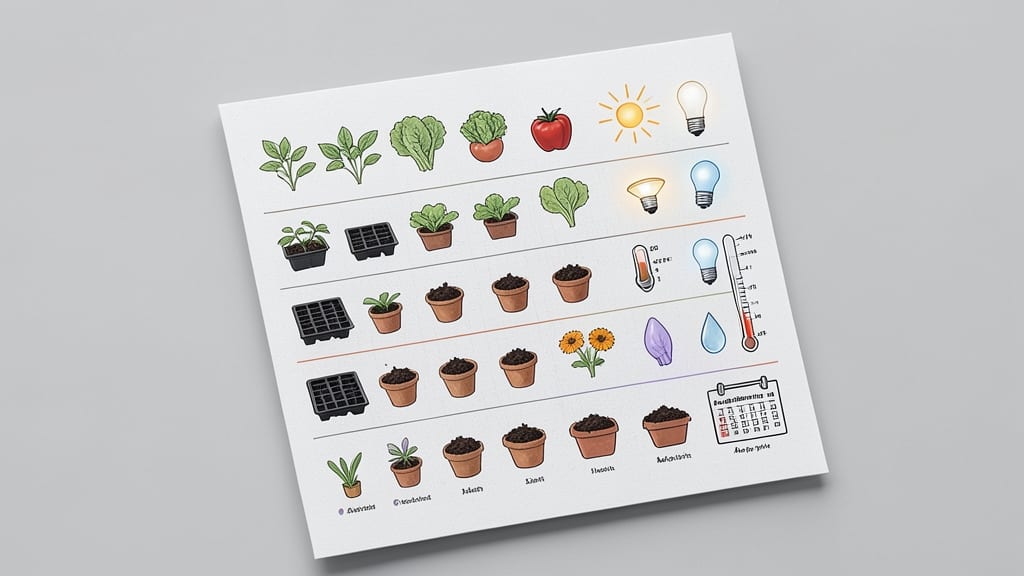
Mastering an indoor seed planting chart is the secret to burly seedlings and a thriving garden—no more guessing games with damp soil or leggy failures. 🌱 My first year, I lost half my seedlings to either bolting too fast or staying stunted—until I mapped out exact start dates by zone and plant type.
This chart turns seed-starting from a gamble into a predictable process, even in small apartments or sunless corners.
The key is matching each plant’s needs to your zone’s last frost date—herbs like basil need just 6-8 weeks indoors, while tomatoes and peppers demand 8-10 weeks to mature before transplanting.
I use simple grow lights or a sunny windowsill, a mix of potting soil and perlite, and a heat mat for slow starters like parsley. Most seeds germinate in 5-14 days if kept at 65-75°F, though some (like snapdragons) need warmth to break dormancy.
By following these timelines, you’ll avoid leggy, weak seedlings and instead get plants that hit the garden ready to thrive. The chart even includes hardening-off schedules so your transplants don’t shock when they move outside.
No more waiting until store-bought seedlings sell out—you’ll have exactly what you want, exactly when you need it.
Works for any space, from a kitchen counter to a basement setup, and adapts to zones 3 through 10. Let’s get those seeds sprouting on schedule!
📚 In This Guide
- What you need
- Instructions
- Tips and common mistakes
- Wrapping up and next steps
What you need
- ● Seeds: Choose fast-growing varieties like basil, lettuce, or microgreens for quick results. Opt for organic, non-GMO seeds (1–5 packets, depending on your project scale).
- ● Containers: Seed trays (biodegradable or plastic, 10x20 inches or smaller).
- ● OR repurposed containers (yogurt cups, egg cartons, or shallow dishes with drainage holes).
- ● Growing medium: Seed-starting mix (sterile, lightweight, and peat-based or coco-coir blends). Avoid garden soil—it’s too dense! (1–2 cubic feet per tray).
- ● Watering can or spray bottle: A fine-mist sprayer (to avoid displacing seeds).
- ● Light source: Grow lights: LED or fluorescent (12–16 hours/day, 2–4 feet above seedlings).
- ● OR sunny windowsill: South-facing for optimal sunlight.
- ○ Humidity dome or plastic wrap: Keeps moisture in during germination (optional but highly recommended).
- ● Hand trowel or small spoon: For gently pressing seeds into soil.
- ● Labels & markers: Track seed varieties and planting dates (use toothpicks + permanent marker for DIY labels).
- ● Thermometer/hygrometer: Monitor soil temp (65–75°F ideal) and humidity.
- ● Fertilizer: Water-soluble, low-nitrogen (e.g., 5-5-5 ratio) for seedlings (½ tsp per gallon of water, once true leaves appear).
- ○ Heating mat (optional): Speeds up germination for slow starters (70–75°F).
- ● Pruning shears/scissors: For transplanting or trimming leggy seedlings.
How to plan your indoor seed planting by USDA Zone
Timing is everything—here’s how to match your zone with the perfect indoor start.
📅 Step 1: Determine Your USDA Zone and Last Frost Date
Find your USDA hardiness zone (1-13) using the USDA Plant Hardiness Zone Map—it’s the foundation for all timing decisions. For example, Zone 5 (cold winters) has a last frost around May 15, while Zone 10 (mild winters) might see frost as late as January 15. Write down your zone and last frost date—this is your planting deadline.
I always double-check with my local cooperative extension office for microclimate quirks. A valley might frost later than the official date, while a hilltop could freeze earlier. Adjust your timeline by 7-10 days if you’re in a frost-prone microclimate. Real talk: Skipping this step means risking weak transplants or lost seedlings.
⏰ Step 2: Calculate Backward from Transplant Date
Most seedlings need 4-8 weeks indoors before transplanting outdoors. Start with your last frost date and subtract the number of weeks your plants need to mature. For instance, tomatoes (8 weeks) in Zone 6 (last frost: May 1) should start indoors by March 15. Use a highlighter to mark these dates on your calendar—this keeps you from scrambling later.
Some plants like peppers and eggplants need 10-12 weeks indoors, while basil and bush beans only need 3-4 weeks. I keep a simple spreadsheet with my zone’s last frost date and a column for each plant’s indoor time—it’s the easiest way to avoid overwhelm. Don’t forget to account for hardening off (7-10 days) before transplanting.
🌱 Step 3: Match Seed Types to Your Zone’s Timeline
Cool-season crops like lettuce, spinach, and peas can handle light frosts and often start 6-8 weeks before last frost. Warm-season plants like tomatoes, peppers, and cucumbers need to wait until 4-6 weeks before last frost to avoid transplant shock. I group seeds by category and label them with their ideal start dates—this prevents mixing up early and late starters.
For Zone 7, I start broccoli by February 15 (8 weeks before last frost) and tomatoes by March 1 (6 weeks before). If you’re in Zone 10, where frost is rare, you might start warm-season crops as early as January 1—just be ready to transplant quickly. Watch for seed packet recommendations (they often list days to maturity), but always cross-check with your zone.
📝 Step 4: Create a Seedling Schedule with Key Milestones
List your target transplant date, then work backward:
- Start seeds (subtract weeks to maturity).
- Thin seedlings (usually 2-3 weeks after germination).
- Hardening off (start 10-14 days before transplant).
- Transplant outdoors (on or after last frost date).
I use a whiteboard in my greenhouse to track progress—seeing the milestones visually keeps me on track. For example, if your last frost is May 10, and you’re growing cucumbers (70 days to maturity), start seeds by March 1 and transplant by April 20. Adjust for slower germination in cooler zones.
Don’t forget to account for seed germination time (5-14 days). If your seeds take 10 days to sprout, start them 10 days earlier than your calculated date. I always add a 2-week buffer for unexpected delays—life happens, and you don’t want to lose your entire batch.
⚠️ Step 5: Adjust for Zone-Specific Challenges
In northern zones (1-4), where winters are long, start heat-loving plants (like tomatoes and peppers) under grow lights to compensate for weak winter sunlight. In southern zones (8-10), where frost is unpredictable, consider season-extending tools like row covers or cold frames for early transplants.
If you’re in Zone 5-7, where frost can return unexpectedly, wait to transplant heat-lovers until after May 15—even if your average last frost is earlier. I’ve lost too many seedlings to late frosts to take chances. For Zone 8-10, where frost is rare, you can start warm-season crops as early as January, but keep them indoors until soil temperatures warm to 60°F+. Use a soil thermometer to confirm.
Tips & tricks for perfect indoor seed planting timelines
Precision timing separates thriving seedlings from wasted efforts—here’s how to nail it every season.
Zone-Specific Adjustments: The 7-10 day buffer mentioned in Step 1 for microclimates isn't just a suggestion—it's critical. I once lost an entire pepper crop in Zone 6 because I trusted the official May 15 frost date without checking my hilltop's history. Use your local cooperative extension office's frost records, not just the USDA map. For northern zones (1-4), add an extra 2 weeks to your indoor timeline if you're using natural light instead of grow lights.
Hardening Off Strategy: The 10-14 day hardening off period in Step 4 is where most transplants fail. Start with just 1 hour of outdoor exposure on day 1, then gradually increase by 1 hour daily. I place seedlings in a sheltered spot (like under a patio cover) to protect them from wind while they acclimate. Skip this step, and you'll get leggy, shocked plants that never recover.
Germination Time Tracking: The 5-14 day germination window in Step 4 varies wildly between seed types. I keep a germination log where I record when each batch sprouts—this helps me adjust future planting dates. For example, basil often germinates in 7 days while peppers can take 14 days. If you're impatient, use a seedling heat mat (70-80°F) to speed up germination, but don't exceed 85°F or you'll get weak, stretched seedlings.
Visual Milestone System: The whiteboard tracking method in Step 4 works because it forces you to see the big picture. I add colored stickers for each plant type—green for cool-season crops, red for warm-season. When you see all your red stickers approaching the hardening off phase, you'll know it's time to prepare your outdoor space. This visual system prevents the "I forgot about these" syndrome that derails so many gardeners.
Pro Tips for Indoor Seed Planting Chart
- Precision timing separates thriving seedlings from wasted efforts—here’s how to nail it every season.
- Zone-Specific Adjustments: The 7-10 day buffer mentioned in Step 1 for microclimates isn't just a suggestion—it's critical.
- Hardening Off Strategy: The 10-14 day hardening off period in Step 4 is where most transplants fail.
Frequently asked questions
Got questions about indoor seed planting? You’re not alone! Here are answers to the most common concerns—whether you're a beginner or a seasoned green thumb.
What’s the best time to start indoor seed planting based on my USDA zone?
Your USDA Hardiness Zone dictates timing! For most vegetables (like tomatoes or peppers), start seeds 6–8 weeks before your last frost date. Check your zone on the USDA Plant Hardiness Zone Map—then use our chart as a guide. Pro tip: Adjust for slow germinators (e.g., onions) by adding 2–3 extra weeks.
How long does it take for seeds to germinate indoors?
Germination times vary wildly! Fast growers (e.g., radishes, lettuce) sprout in 3–7 days, while stubborn seeds (like parsley or carrots) may take 2–4 weeks. Our chart lists average timelines per seed type, but soil warmth (70–90°F) and moisture speed things up. Use a heat mat if your home runs cool.
Can I use regular potting soil for indoor seed starting?
Not ideal! Opt for a seed-starting mix—it’s sterile, lightweight, and drains well. Regular potting soil can compact, suffocate roots, and harbor fungus. Mix in perlite or vermiculite (20%) for extra aeration. Skip the fertilizer; young seedlings need gentle nutrients (use a diluted solution if needed).
Why are my indoor seedlings dying or turning yellow?
Common culprits:
- Overwatering (check soil moisture—it should feel like a damp sponge).
- Underwatering (wilting or crispy leaves = thirsty plants!).
- Leggy seedlings (not enough light—move them within 2–3 inches of a grow light).
- Fungal issues (damp conditions = mold; improve airflow with a small fan).
Isolate affected plants and adjust care immediately. A 50% humidity tray (pebbles + water) can help recover stressed seedlings.
What are the easiest seeds to grow indoors for beginners?
Start with these foolproof picks:
- Lettuce (germinates in 5–10 days, loves cool temps).
- Radishes (ready in 3–4 weeks, great for quick wins!).
- Basil (fast-growing, forgiving, and pest-resistant).
- Green onions (harvest roots in 2 weeks or regrow from scraps!).
Check our chart for their exact timelines—these are perfect for building confidence before tackling trickier crops like tomatoes or peppers.
Wrapping up and next steps
Mastering an indoor seed planting chart gives you the power to grow thriving plants year-round—no matter your climate zone! By following zone-specific timelines, you’ll boost germination rates and enjoy fresher herbs, veggies, or flowers indoors. 🌱
Ready to turn your space into a green oasis? Start small with one or two easy seeds, track progress, and gradually expand your indoor garden. Happy planting—your future harvests are waiting! 🌱💚