
Pruning
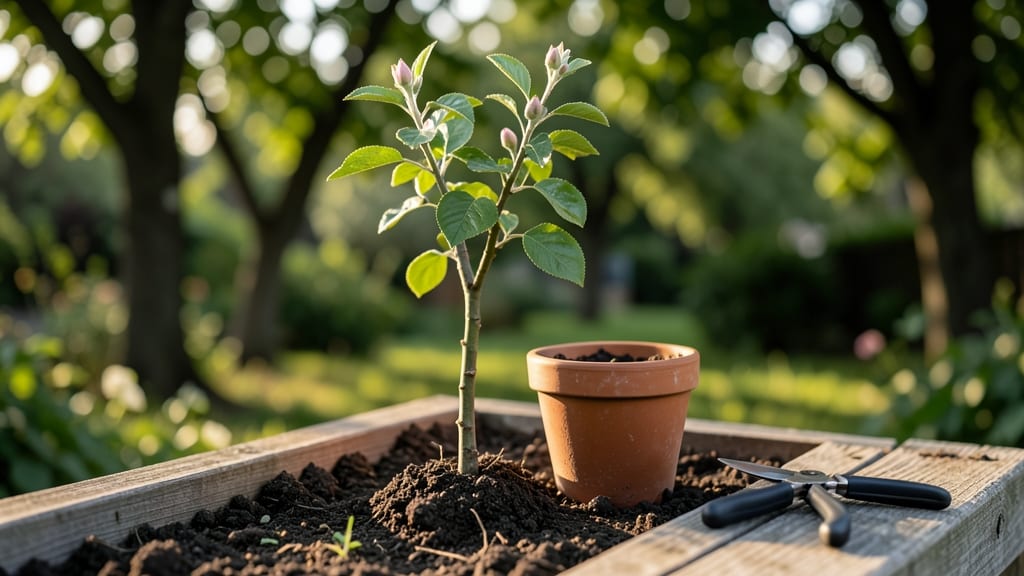
The identification of an apple tree seedling starts with those jagged, glossy leaves—serrated edges pointing outward are your first clue. 🌿 I’ve spent years sorting through seedlings, and the telltale serrated leaves are what give them away.
Crabapples have similar leaves, but they’re narrower and often curl at the edges, while true apple seedlings show broader, more uniform lobes.
The bark and growth habit seal the deal. Young apple seedlings have smooth, greenish-gray bark that develops subtle lenticels (tiny raised dots) as they age. Crabapples, meanwhile, grow faster with thinner branches and often bear tiny, bitter fruit by age 3—something true apple seedlings won’t do until they’re grafted.
Pay attention to the buds too: apple buds are plump and pointed, while crabapple buds are flatter and rounded.
Mistakes happen when people confuse apple seedlings with pear or hawthorn seedlings—both have serrated leaves but with key differences. Pears have more rounded leaf lobes, and hawthorns have clusters of sharp thorns by age 2.
Once you train your eye, you’ll spot the right seedlings in your yard or nursery rows, setting yourself up for a future orchard.
Pro tip: Snap a photo of the leaves and compare them to a reference guide. The more seedlings you examine, the sharper your identification skills become—no more guessing games when planting your next fruit tree!
Root Causes Of Misidentifying Seedlings
Identifying apple tree seedlings correctly can feel like solving a botanical puzzle—especially when nature throws a few curveballs your way. Whether you're a seasoned gardener or a curious beginner, misidentifying seedlings often boils down to a mix of biological quirks, environmental factors, and human oversight.
Let’s break down the key reasons why this happens, so you can spot the red flags (or green leaves!) before they grow into full-blown mistakes.
Apple trees don’t reproduce true-to-type from seed—meaning a seedling from a Granny Smith apple won’t grow into a Granny Smith tree. Here’s why:
- Cross-pollination chaos: Apple trees are not self-pollinating. Bees and wind carry pollen from multiple varieties, creating hybrid seedlings with unpredictable traits. That "perfect" Honeycrisp seedling you planted? It might end up tasting like a cross between a Fuji and a crabapple.
- Polyembryony exceptions: Some apple varieties (like Golden Delicious) can produce nucellar seedlings—genetically identical clones of the parent tree. But this is rare and not guaranteed. Most seedlings will be sport mutations or hybrids.
- Seed viability varies: Older or stored seeds may sprout but lack vigor, leading to weak, stunted seedlings that don’t resemble the parent tree at all. Pro tip: Use fresh seeds from a known source for better odds of recognizable traits.
💡 Actionable fix: If you want a specific apple variety, grafting is your best bet. Seedlings are a gamble—save them for rootstock or experimental growing!
Apple tree leaves are your best clues, but they’re not foolproof. Here’s how misleading they can be:
| Cause | What Happens | How to Spot It |
|---|---|---|
| 🌿 Juvenile vs. mature leaves | Seedlings often sprout juvenile leaves—smaller, simpler, and sometimes lobed differently than adult trees. As they mature, leaf shape can shift dramatically. | Compare seedlings to reference photos of mature trees. Juvenile leaves might look like a crabapple when they’re actually a McIntosh in disguise. |
| 🌡️ Environmental stress | Drought, poor soil, or extreme heat can stunt growth and alter leaf shape. A stressed seedling might develop crinkled edges or unusual serrations, making it hard to match to a variety. | Grow seedlings in consistent conditions (moisture, sunlight, nutrients) to see their "true" form. |
| 🦟 Pests or disease | Insects (like aphids or mites) or fungal infections (e.g., apple scab) can distort leaves, making them look like a different species entirely. | Inspect undersides of leaves for pests or spots. Treat issues early to avoid misidentification. |
✨ Pro tip: Use a magnifying glass to examine leaf veins, serration patterns, and hairiness—these details are often variety-specific!
If you’re dealing with a nursery-bought "apple tree seedling," it might not be what it seems:
- Rootstock deception: Many commercial apple trees are grafted onto hardy rootstock (like Malling or Antonovka) to improve disease resistance. The scion (top part) is the "fancy" variety, but the roots belong to a different, often wild, apple relative.
- Chimera seedlings: Rarely, a seedling might sprout with a mix of two genetic types (e.g., half the leaves look like Gala, the other half like Pink Lady). This happens when grafting goes awry.
- Mislabeling: Nurseries aren’t perfect. A seedling labeled Red Delicious might actually be a crabapple hybrid if the source was contaminated.
🔍 How to check: Look for graft union scars (a bulge or knot where the scion meets the rootstock). If it’s a true seedling, there won’t be one!
Sometimes, the problem isn’t the tree—it’s the observer. Here’s how we trip ourselves up:
- Relying on fruit (not leaves): Seedlings take 3–5 years to bear fruit. Jumping to conclusions based on a single apple (or none at all) is a fast track to disappointment.
- Ignoring bark and branch patterns: Mature apple trees have distinct bark textures (e.g., smooth for Fuji, ridged for Granny Smith). Seedlings’ bark is too thin to judge, but branch angles can hint at variety.
- Seasonal leaf changes: In fall, apple leaves turn colors specific to their genetics. A Golden Delicious might blush pink, while a Braeburn stays green longer. Skipping this step is like judging a book by its cover.
- Comparing to photos (not real trees): Online images can be stretched, filtered, or mislabeled. Always cross-reference with local orchard samples or botanical databases.
🎯 Best practice: Keep a field notebook with sketches of leaf shapes, vein patterns, and growth habits. Over time, you’ll train your eye to spot subtle differences.
Fixing Seedling ID Mistakes
Mistakenly identifying an apple tree seedling can lead to disappointment—whether you planted the wrong variety or missed a disease-ridden sapling. But don’t worry! With the right fixes and prevention strategies, you can correct errors and ensure your orchard thrives.
Below are practical solutions tailored to common causes of misidentification, along with proactive tips to avoid future headaches.
If you planted a seedling you thought was one type but later discovered it’s another (or just a random wild apple), you have a few options:
1. 🔍 Verify with Leaf & Fruit Traits
Before taking drastic action, double-check:
- Leaf shape & veins: Compare with trusted sources (e.g., University of Minnesota’s apple leaf guide).
- Fruit characteristics: If the tree is mature enough, observe color, size, and texture.
- Grafting scars: If the seedling was grafted (even poorly), look for a bulge near the base—this could mean it’s a different variety than the rootstock.
Pro Tip: 💡 Snap a clear photo and cross-reference with local nursery catalogs or gardening forums. Sometimes, a second opinion clarifies confusion!
2. 🌿 Rootstock vs. Scion: What’s Really Growing?
If the seedling was supposed to be grafted but failed:
- Dig carefully around the base to check for a graft union (a swollen area where two plants were joined).
- If no graft is visible, the tree is likely growing from the rootstock—often a hardy but not the desired variety (e.g., a seedling from a Granny Smith rootstock may sprout a wild apple instead).
- Solution: If the rootstock is unwanted, you can graft a new scion onto it later.
Just ensure the rootstock is healthy!
3. 🔨 Replace or Retrain?
- For non-productive seedlings: If the tree is young and clearly the wrong variety, dig it out and replant a certified nursery sapling.
- For established trees: If the tree is mature but the wrong type, consider pruning to shape it as a standard tree (though it may never bear the expected fruit).
Alternatively, graft a new branch of the desired variety onto it.
If your seedling shows signs of stress (yellowing leaves, holes, or fungal spots), misidentification might not be the issue—pests or pathogens could be.
1. 🐜 Common Seedling Pests & Fixes
| Pest | Signs | Solution |
|---|---|---|
| Aphids | Sticky leaves, curled new growth | Spray with soapy water or introduce ladybugs. |
| Apple Sawfly | Ragged leaf edges | Handpick larvae or use Bt (Bacillus thuringiensis) spray. |
| Coddling Moth | Holes in fruit, webbing | Prune infested fruit and use pheromone traps in spring. |
Pro Tip: 🌡️ Monitor regularly—early detection prevents small issues from becoming orchard-wide disasters!
2. 🍄 Fungal Issues?
Treat Aggressively - Apple Scab: Dark spots on leaves → Copper fungicide or baking soda spray (1 tbsp baking soda + 1 quart water + a drop of dish soap). - Powdery Mildew: White dust on leaves → Neem oil or sulfur spray (apply in early morning). - Root Rot: Wilting despite watering → Improve drainage and avoid overwatering.
Prevention Tip: ✨ Space seedlings properly (6–10 ft apart) to reduce humidity and fungal spread.
Once you’ve corrected the issue, keep these tips in mind for next time:
1. 🛒 Buy Certified Nursery Stock
- Why? Seedlings from reputable nurseries are grafted and labeled, reducing the risk of surprises.
- Where? Look for USDA-approved or local extension office-recommended suppliers.
2. 📝 Keep Detailed Records
- Label everything with variety name, planting date, and source.
- Take photos of leaves, flowers, and fruit as the tree matures for future reference.
3. 🌱 Test Soil & Conditions First
- pH matters: Apple trees thrive in slightly acidic soil (6.0–6.5). Test your soil before planting.
- Sunlight: Seedlings need 6+ hours of sun daily—shady spots lead to weak, disease-prone trees.
4. 🔄 Regular Pruning & Inspections
- Prune in late winter to remove dead or diseased wood.
- Inspect monthly for pests, fungal signs, or unexpected growth patterns.
With these fixes and precautions, your apple tree seedlings will grow into healthy, productive trees—exactly as you envisioned. Happy gardening! 🍏🌿
Frequently asked questions
What’s the easiest way to tell an apple tree seedling apart from a crabapple?
Look at the leaf edges—they’re your best clue! Apple seedlings have broader, more uniform serrations that point outward, while crabapple leaves are narrower with curled or wavy edges. Also check the bark: apple seedlings develop tiny raised dots (lenticels) as they age, while crabapples grow faster with thinner branches.
Can I grow a true-to-type apple tree from a seed?
Almost never! Apple trees don’t reproduce true-to-type from seeds—most seedlings become unpredictable hybrids. Only rare varieties like Golden Delicious (through polyembryony) might produce identical offspring. For specific varieties, always choose grafted nursery stock instead.
How do I know if my seedling is healthy or diseased?
Watch for these red flags: Yellowing leaves (nutrient deficiency), sticky residue (aphids), or white powder (powdery mildew). Healthy seedlings have vibrant green leaves, smooth bark, and steady growth. If you spot issues, isolate the plant and treat with neem oil or soapy water.
Why do some apple seedlings grow so much faster than others?
Growth speed depends on genetics and environment! Seedlings from crabapple parents often grow faster than true apple varieties. Other factors include soil quality, sunlight exposure, and water availability. If yours is lagging, check for compacted soil or pests that might be stunting growth.
How long until I can identify an apple seedling with certainty?
Give it at least 1-2 years—that’s when leaves mature and bark develops key traits. Early identification is tricky because seedlings often have juvenile leaves that don’t resemble adult trees. Compare your seedling to reference photos of mature varieties for the most accurate match.