
Planting
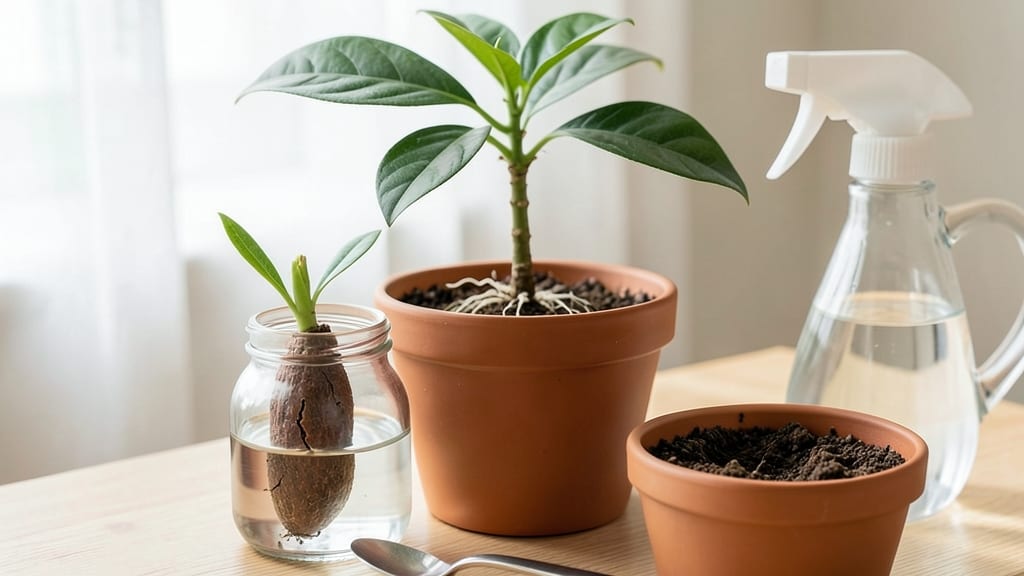
Learn how to plant an avocado seed indoors—no green thumb required. 🌱 I've sprouted more avocado seeds than I can count, and the process is simpler than you'd think, especially when you use the classic toothpick method.
The key is patience and keeping the pit moist without drowning it, which is where most beginners go wrong.
You'll need just four things: a fresh avocado pit, three toothpicks, a glass or jar, and water. The toothpicks prop up the pit so the bottom half sits in water while the top stays dry.
Within 2-4 weeks, you'll see roots forming—proof the seed is waking up. This isn't just a science experiment; it's the start of a real plant.
By 60 days, you could have a 6-inch-tall seedling with glossy leaves, ready to graduate from its jar to soil. The trick is balancing sunlight (bright but indirect) and water (just enough to keep the base damp, not soggy).
Overwatering is the #1 killer, so let the water level drop before refilling.
Once roots hit 2-3 inches, it's time to plant in a pot with well-draining soil. Keep it warm and humid for the first few weeks, and you'll watch those first true leaves unfurl.
Yes, it might take years to bear fruit, but the journey is the reward—especially when you explain to kids how a kitchen scrap became a tree.
📚 In This Guide
- What you need
- Instructions
- Tips and common mistakes
- Wrapping up and next steps
What you need
- ● 1 fresh avocado pit – Choose a seed from a ripe, organic avocado for the best results.
- ● 3–4 toothpicks or skewers – To suspend the seed while it roots.
- ● 1 small glass or jar – A clear container (8–12 oz) with a wide enough opening to fit the seed.
- ● Water – Filtered or room-temperature tap water (changed every 2–3 days).
- ● Well-draining potting mix – A blend of peat, perlite, or coconut coir (avoid heavy garden soil).
- ● Small pot (4–6 inches wide) – With drainage holes to prevent root rot.
- ● Spray bottle – For gentle watering once the seedling sprouts.
- ○ Rooting hormone – Speeds up root development (optional but useful for stubborn seeds).
- ● Grow lights or sunny windowsill – If natural light is limited (6+ hours of indirect light daily).
- ● Fertilizer (balanced, diluted) – Introduce after 2–3 months of growth (e.g., fish emulsion or seaweed extract).
- ● Humidity dome or plastic wrap – Helps maintain moisture while roots establish.
- ● Measuring cup or ruler – To track seedling growth and water levels.
Step-by-step instructions for planting avocado seeds indoors
Turn that avocado pit into a thriving houseplant with these simple, foolproof steps.
🌱 Step 1: Prepare the Avocado Pit for Planting
Rinse the avocado pit thoroughly to remove any remaining fruit residue—this prevents mold. I like to scrub it gently with a soft brush under running water. The key here is to clean it without damaging the smooth, dark outer skin. Once clean, let it dry completely on a paper towel for about 24 hours.
After drying, you'll notice three distinct sections: the top (where the stem was), the middle (the seed itself), and the bottom (the root end). The root end is usually flatter and slightly lighter in color. This is where your roots will emerge, so don't skip this step—planting it upside down will leave you waiting months for growth.
🪴 Step 2: Insert Toothpicks and Suspend the Pit
Take three toothpicks and insert them evenly around the middle of the pit, about ½ inch apart. Push them in gently but firmly—you want them to hold the pit securely without piercing the skin. The toothpicks should form a triangle that balances the pit when suspended.
Place the pit over a glass or jar filled with 2-3 inches of water so that the bottom ¼ inch of the pit is submerged. The water level should stay just below the toothpicks to prevent them from getting soggy. Position the setup in a warm spot with bright, indirect light—a kitchen windowsill works perfectly.
💧 Step 3: Maintain Water and Wait for Roots
Check the water level every 2-3 days and top it off to keep the bottom of the pit submerged. You'll notice the water turn slightly cloudy as the pit releases enzymes—this is normal. Within 2-4 weeks, roots will begin sprouting from the bottom. You'll see tiny white tendrils emerging first, followed by longer, more defined roots.
Here's the thing—don't rush this step. The roots need time to grow strong enough to support the plant. Once they reach about 2 inches long, it's time to move to soil. If the roots grow too long before transplanting, they'll tangle and break easily, so keep an eye on them.
☀️ Step 4: Transplant to Soil and Encourage Growth
Fill a 6-inch diameter pot with well-draining potting mix—avoid garden soil, as it compacts too easily. Make a small hole in the center and gently place the avocado pit so that the roots are covered but the top half remains exposed. Press the soil lightly around the pit to secure it without compacting.
Water the soil until it's evenly moist but not soggy. Place the pot in a spot with bright, indirect light for the first week to help it adjust. After that, gradually introduce more direct sunlight. You'll see the first true leaves emerge in about 4-6 weeks, signaling that your seedling is thriving.
⏰ Step 5: Care for Your Growing Avocado Tree
Keep the soil consistently moist but never waterlogged—avocado trees hate soggy roots. Water when the top 1 inch of soil feels dry to the touch. Rotate the pot a quarter turn weekly so the plant grows straight toward the light instead of leaning.
Once your avocado tree reaches about 12 inches tall, it's ready for a larger pot—around 10-12 inches in diameter. Prune any yellow or damaged leaves immediately to encourage new growth. With patience, your kitchen scrap can become a lush, leafy indoor tree in just 60 days.
Tips & tricks for planting avocado seeds indoors
Transforming an avocado pit into a thriving plant requires patience and a few key tricks—here's how to set yourself up for success.
Pit Identification: The most critical step is getting your pit oriented correctly. Look for the small indentation at the top where the stem was attached—this is the "north pole" of your seed. The bottom, flatter end is where roots will emerge. If you plant it upside down, you'll be waiting months for growth instead of weeks. I've seen people skip this step and wonder why nothing happens!
Toothpick Placement: When inserting the three toothpicks around the pit, aim for equal spacing about ½ inch apart. Push them in just enough to hold the pit securely—you don't want to pierce the skin. The toothpicks should form a stable triangle that keeps the pit suspended above the water without wobbling. This balance prevents the pit from tipping over and falling into the water.
Water Maintenance: The 2-3 inches of water in your container might seem like plenty, but you'll need to check it every 2-3 days. Top off the water to keep the bottom ¼ inch of the pit submerged—this consistent moisture level is what triggers root growth. I've seen people let the water evaporate completely between checks, which can stall root development. Keep a small pitcher of water nearby to make top-offs quick and easy.
Light Exposure: Bright, indirect light is non-negotiable for successful growth. A south-facing window is ideal, but if that's not available, a grow light on a timer works wonders. Direct sunlight can scorch the pit, while too little light will result in weak, leggy growth. If you notice your pit developing toward the light source, rotate it gently every few days to encourage even growth.
Pro Tips for Plant An Avocado Seed Indoors
- Transforming an avocado pit into a thriving plant requires patience and a few key tricks—here's how to set yourself up for success.
- Pit Identification: The most critical step is getting your pit oriented correctly.
- Toothpick Placement: When inserting the three toothpicks around the pit, aim for equal spacing about ½ inch apart.
Frequently asked questions
Got questions about growing your own avocado tree from a seed? You’re not alone—this process sparks curiosity (and a few worries!) for many beginners. Here are answers to the most common queries to keep your green thumb journey smooth:
How long does it take for an avocado seed to sprout?
Patience is key! Most avocado seeds sprout within 2–6 weeks after planting, depending on temperature (ideal: 70–85°F) and moisture levels. If nothing happens after 8 weeks, gently check for rot or adjust your care routine. Pro tip: Keep the toothpicks or skewers in place—they prevent overcrowding and encourage faster growth!
Will my indoor avocado tree ever bear fruit?
While possible, it’s unlikely indoors—most avocado trees grown from seeds take 5–13 years to fruit, and they need full sun (12+ hours) and outdoor conditions to thrive. Grafted nursery trees are your best bet for fruit! Fun fact: Even if it doesn’t fruit, your tree will be a stunning, low-maintenance houseplant.
Why is my avocado seed turning black or mushy?
This is a red flag for rot, usually caused by overwatering or poor drainage. If the seed feels soft or smells foul, remove it and repot the healthy sprouts in fresh, well-draining soil. Fix it: Let the soil dry slightly between waterings, and ensure the jar or pot has drainage holes.
Can I plant an avocado seed directly in soil instead of water?
Yes! Some gardeners skip the water phase and plant the seed halfway in moist soil (like a mini greenhouse). Just keep the soil consistently damp (not soggy) and place it in bright, indirect light. This method works well if you’re eager to skip the waiting game—but monitor for mold or dryness closely.
Is it safe to eat the avocado pit after planting?
Nope!
The pit contains persin, a compound that’s toxic in large amounts (especially for dogs). Even after sprouting, the seed itself isn’t edible. Stick to the flesh—it’s the star of the show! Bonus: Save the pit for planting instead of tossing it.
What’s the best temperature for growing an avocado seed indoors?
Avocado seeds love warmth! Keep them in a spot between 65–85°F (18–29°C). Avoid drafts (like AC vents) or cold windowsills. If your home runs chilly, a seedling heat mat can give them a cozy boost. Watch out: Sudden temperature drops can stunt growth.
How do I know when to transplant my avocado seedling to soil?
Transplant when you see 2–3 inches of green growth and roots peeking from the jar or soil. Choose a 6–8 inch pot with drainage, fill it with well-draining potting mix, and bury the seedling up to its first leaves. Water lightly and place it in bright, indirect light for the next phase!
Wrapping up and next steps
Growing an avocado tree from a seed is a rewarding journey that turns a simple kitchen scrap into a thriving houseplant—and you’ve just mastered the first steps! 🌱 With patience, care, and the right techniques, your seedling could one day grow into a full-sized tree, offering shade, beauty, and even fruit (though it’ll take years!).
The key is consistency: keep nurturing your little sapling with love, and soon, you’ll watch it flourish right in your home.
Now that you’re set up for success, why not level up? Try experimenting with different soil mixes, pots, or even propagating more seeds to expand your indoor jungle. Happy planting—your green thumb is about to get even greener! 🌿✨