
How To
Growing zucchini from seed to harvest takes about 50 days under ideal conditions, but the timeline shifts with variety, climate, and a few key tricks you might not know.
Picture this: you’ve just tucked those tiny seeds into warm soil 🎃, dreaming of summer salads, only to wonder why your neighbor’s plants are already bearing fruit while yours are still sending up vines.
The difference often comes down to soil temperature, sunlight, and even the specific zucchini variety you chose—some mature in as little as 40 days, while others take closer to 60 days.
In this guide, I’ll break down the exact days to harvest for popular varieties like Black Beauty and Golden Zucchini, plus how to adjust your expectations based on your USDA Zone 6a climate.
You’ll also learn how to spot the perfect moment to pick your zucchini for peak flavor—because timing really is everything when it comes to these fast-growing squashes.
Ready to turn those seeds into a bountiful harvest? Let’s dive into the science (and shortcuts) behind getting from seed to salad bowl in record time.

Zucchini seed to harvest timeline: exact days by popular variety
If you're eager to enjoy homegrown zucchini, knowing the exact days to harvest by variety helps you plan your garden efficiently. Most zucchini types mature between 45 to 60 days, but the timeline varies based on the variety and growing conditions.
For example, Black Beauty and Golden Zucchini are classic choices with slightly different timelines, while Patio Star is perfect for container growers.
Understanding these timelines ensures you can track your plants' progress from seed germination to fruit production. Whether you're a seasoned gardener or a beginner, this breakdown will help you set realistic expectations and optimize your harvest.
Let’s dive into the specifics for the most popular varieties and how to monitor their growth stages.
| Variety | Days to Maturity | Growth Stages | Best For |
|---|---|---|---|
| Black Beauty | 45-55 days | Seedling (2 weeks), Flowering (3 weeks), Fruiting (4-6 weeks) | Large gardens, high yields |
| Golden Zucchini | 50-58 days | Seedling (2 weeks), Flowering (3-4 weeks), Fruiting (4-6 weeks) | Sunny climates, sweet flavor |
| Patio Star | 45-50 days | Seedling (2 weeks), Flowering (3 weeks), Fruiting (3-4 weeks) | Containers, small spaces |
| Eight Ball | 50-55 days | Seedling (2 weeks), Flowering (3 weeks), Fruiting (4-5 weeks) | Compact growth, round fruit |
| Costata Romanesco | 55-60 days | Seedling (2-3 weeks), Flowering (4 weeks), Fruiting (5-6 weeks) | Heirloom varieties, gourmet use |
Each variety has distinct characteristics that influence its growth timeline. For instance, Black Beauty is a fast grower, reaching maturity in as few as 45 days, while Costata Romanesco takes slightly longer due to its heirloom nature.
The Patio Star variety is ideal for container gardening, making it perfect for urban growers or those with limited space.
To track your zucchini’s progress, start by noting the days after sowing. Once your seeds sprout, count the days until you see the first true leaves, which typically appear within 7 to 14 days.
This marks the beginning of the seedling stage. Watch for the transition to the flowering stage, which usually occurs around 3 to 4 weeks after germination.
During the flowering stage, you’ll notice yellow blooms appear. This is when your plants are preparing to produce fruit. Pay close attention to the female flowers, which have a tiny zucchini forming at the base.
Once these flowers are pollinated, you’ll see the early signs of fruit development, which typically takes another 3 to 4 weeks to reach harvest size.
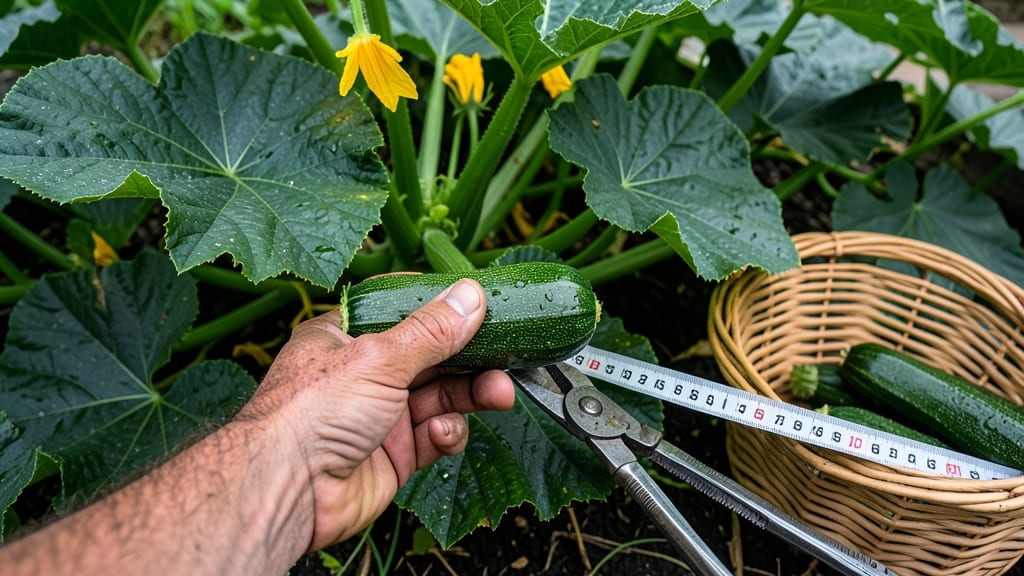
Harvesting your zucchini at the right time is key to maximizing flavor and yield. Aim to pick your zucchini when it’s between 6 to 8 inches long and the skin is firm but not hard.
Harvesting too late can result in oversized, seedy fruit. Use a sharp knife or pruners to cut the zucchini from the vine, leaving a small portion of the stem attached to prevent damage.
If you’re growing multiple varieties, keep a garden journal to track each plant’s progress. Record the number of days to maturity for each variety, along with any notable observations about growth conditions.
This will help you refine your approach for future plantings and ensure you’re ready to harvest at the optimal time.
For faster growth, ensure your zucchini plants receive full sun exposure (at least 6-8 hours daily) and consistent moisture. Mulching around the base of the plants can help retain soil moisture and regulate temperature, which can speed up the fruit development process.
With the right care, you’ll be enjoying fresh, homegrown zucchini in no time!
How climate and growing conditions affect zucchini harvest times
Your zucchini seeds might promise a 50-day harvest on the packet, but real-world conditions can stretch or shrink that timeline dramatically. Temperature swings, sunlight exposure, and soil quality all play starring roles in how quickly your plants go from sprouts to squash.
In my Zone 7 garden, I’ve seen harvests arrive in as few as 45 days with ideal conditions—or drag out to 70 days when Mother Nature throws curveballs.
Cool climates with short growing seasons (like Zone 4 or 5) often delay maturity by 10-20 days compared to warm regions. Meanwhile, container gardening in hot zones can speed things up if you use black plastic mulch to warm the soil.
The key? Understanding how to optimize each factor so you’re not left staring at empty vines when your neighbors’ zucchini are ready to grill.
⚠️ callout warning ⚠️
Those 50-day estimates assume ideal conditions—70°F soil, 8+ hours of sun, and rich, well-draining soil. In cooler climates or shady spots, add 2-3 weeks to your timeline. My Patio Star zucchini took 68 days in a partially shaded raised bed last summer!
💡 Pro Tip: Use a soil thermometer—zucchini seeds need 60°F+ soil to germinate. If it’s cooler, wait or use black plastic mulch to warm it up faster.
Let’s start with temperature, the biggest wild card. Zucchini seeds won’t germinate below 60°F soil temps, and growth slows dramatically when daytime highs dip below 70°F. In my early spring plantings, I’ve lost 10-14 days of growth waiting for soil to warm.
On the flip side, heatwaves above 90°F can stress plants, leading to blossom drop and fewer fruits—so shade cloth becomes your best friend in Zone 9+ gardens.
Sunlight is equally critical: zucchini are sun-hungry and need 6-8 hours daily to hit their 50-day maturity targets. Cut that to 4 hours (like in urban balconies or dense shade), and you’ll add 2-3 weeks to your harvest time. I once grew Golden Zucchini under a trellis with dappled light—they matured in 72 days instead of the expected 48. For container growers, south-facing spots are non-negotiable.
Don’t overlook soil quality, which affects both germination speed and plant vigor. Amend your soil with compost or aged manure before planting to ensure fertile, well-draining conditions. Compacted or sandy soil can delay germination by 5-7 days and stunt growth.
My raised beds (filled with 50% compost) produce zucchini 10 days faster than my in-ground plots. Test your soil’s pH (6.0-7.0 ideal)—acidic or alkaline extremes slow nutrient uptake, pushing back harvests.
To optimize your harvest time, combine these strategies: use black plastic mulch to warm cool soils, prune lower leaves to maximize sunlight, and fertilize lightly with 10-10-10 when flowers appear. In short-season areas, opt for bush varieties like Eight Ball (maturity: 45 days) over vining types.
With the right conditions, you can shave 10-15 days off the standard timeline—and enjoy summer squash weeks earlier!
Remember, every garden is unique. Keep a growth journal to track your zucchini’s progress—note when you planted, soil temps, and sunlight hours. Over time, you’ll spot patterns (like my Zone 7 garden’s 58-day average) and adjust for faster, more reliable harvests. Happy growing!