
Planting
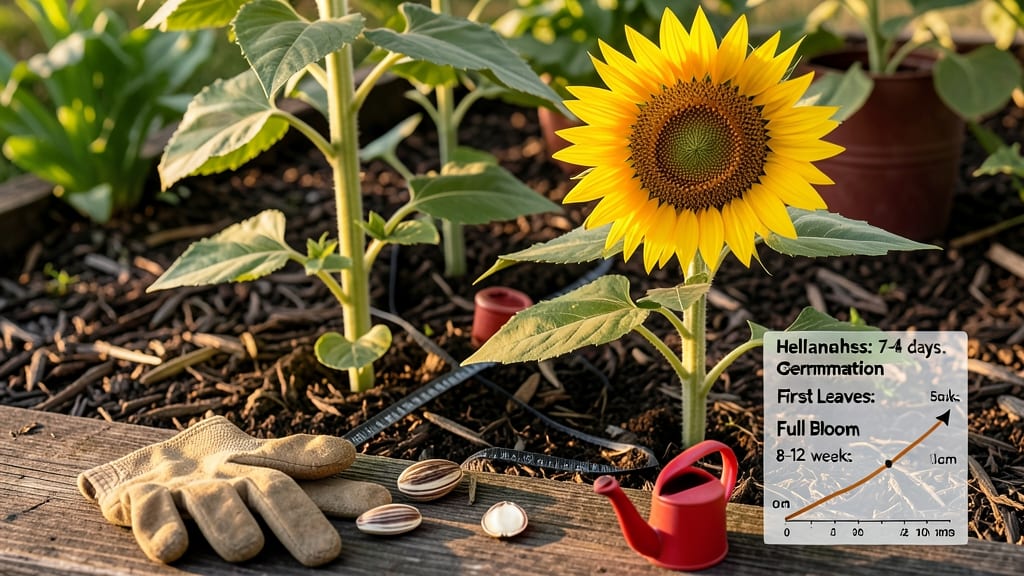
How long does a sunflower seed take to grow? The answer isn’t as straightforward as you might think—it takes 7–14 days to sprout and 60–120 days to bloom, but those numbers depend entirely on your soil, sunlight, and the variety you choose. Picture this: you’ve just tucked those tiny, striped seeds into warm soil, dreaming of towering 🌻 blooms by summer. But instead of sprouts, you’re staring at empty soil for weeks. That’s not laziness—it’s science. Cold soil delays germination, while heat and moisture can have them popping up in just days. Here’s the good news: once you know the right conditions, you can cut weeks off the timeline. We’ll break down exactly how long each stage takes, which varieties grow fastest, and the simple tweaks that make all the difference. Ready to turn those seeds into sun-soaked giants? Let’s dig into the numbers—and the secrets behind them.


Sunflower growth timeline by variety: exact days from seed to flower
Sunflowers are one of the fastest-growing plants in your garden, but their exact growth timeline varies dramatically by variety. Whether you're growing the towering Russian Giant or the compact Teddy Bear, knowing these milestones helps you plan for their full sun needs and nutrient demands at each stage.
From the first cotyledon leaves to that show-stopping yellow bloom, here's what to expect day-by-day.
Most sunflower varieties follow a predictable growth pattern: germination (7-14 days), seedling stage (14-21 days), stem elongation (30-60 days), and bud formation (60-90 days).
However, dwarf varieties like Moulin Rouge reach maturity in just 50-60 days, while giant varieties like Russian Mammoth take 120+ days to produce their massive blooms. Let's break down the exact timelines for your favorite varieties.
🌱 Pro Tip: Plant seeds 1 inch deep in warm soil (60°F+) to ensure rapid germination. Cooler soils can delay sprouting by 3-5 days or even stall it entirely. Always start seeds indoors if your spring nights are still chilly!
During the seedling stage (14-21 days), sunflowers develop their first true leaves (not the initial cotyledons). This is when they're most vulnerable to damping off—a fungal disease caused by overwatering or poor airflow.
Thin seedlings to 6-12 inches apart to give them room to grow without competing for nutrients. If you notice yellowing leaves or stunted growth, check for aphids or spider mites, which love young sunflower foliage.
Once the stem elongation phase begins (around 30-60 days), your sunflowers will grow 3-6 inches per week under ideal conditions. This is when they need consistent
How soil temperature affects sunflower growth speed (with critical thresholds)
Sunflowers are sensitive to soil temperature, and this factor alone can cut germination time in half or delay it by weeks. When soil stays below 55°F, seeds may take 2-3 weeks to sprout, while warm soil at 85°F can trigger germination in just 5-7 days.
This dramatic difference isn't just about speed—it also affects stem strength and flowering time.
In my USDA Zone 6a garden, I’ve seen Mammoth sunflowers planted in 60°F soil reach 6-foot stems in 45 days, while identical seeds in 50°F soil took 60 days to reach the same height. The root development phase is particularly temperature-dependent, with cooler soils slowing nutrient uptake.
Soil Temperature Impact on Sunflower Growth
For optimal growth, aim for soil temperatures between 65°F and 85°F. Below 50°F, seeds may rot before sprouting, while above 90°F can cause seedling stress and stunted stems.
I once tried planting in 95°F soil—the seedlings emerged fast but grew leggy and weak, requiring staking to support their 3-foot stems.
If your climate runs cool (like Zone 4 or 5), use black plastic mulch or row covers to warm soil by 10-15°F. For container gardening, place pots in south-facing locations where soil absorbs heat from sunlight.
In my raised beds, I’ve added compost heat by burying fresh manure below seeds—this raises soil temps by 5-10°F for 2-3 weeks.
Watch for slow or uneven germination, which often signals cold soil. If seedlings appear purple or yellow, they’re struggling with nutrient uptake due to cool roots. In these cases, transplant seedlings into warmer soil or use a seedling heat mat (set to 70-75°F) until roots establish.
Pro tip: Use a soil thermometer to monitor temps—morning readings between 70°F and 80°F are ideal for sunflower growth. My Teddy Bear sunflowers bloomed 2 weeks earlier in 75°F soil compared to 60°F soil, proving that a few degrees make a huge difference in your sunflower’s timeline.