
Propagation
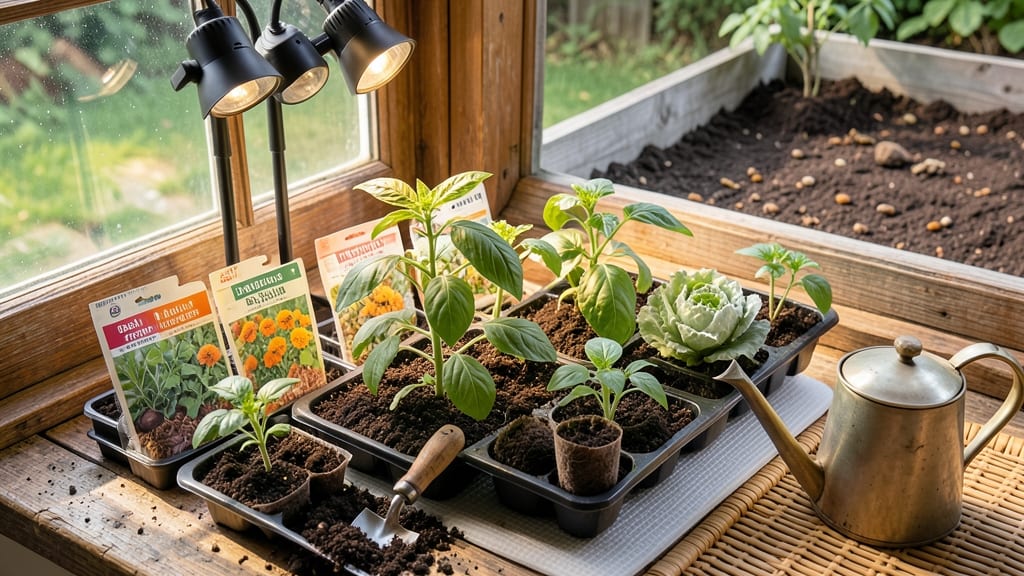
Mastering growing from seed tips means precision timing—get it right, and you’ll have thriving plants ready for transplant; get it wrong, and you’ll waste weeks waiting for second chances. ✨ I’ve learned the hard way that zone-specific schedules are everything, especially when balancing light, temperature, and last-frost dates.
A single miscalculation can turn eager seedlings into leggy, weak survivors that struggle to adapt outdoors.
Your success starts with the right tools: seed-starting trays, sterile seed-starting mix, and a heat mat for warmth-loving plants like peppers. I swear by grow lights (not just windowsills) to prevent stretching, and a spray bottle for gentle watering that keeps seeds from washing away.
The key is consistency—too much light burns seedlings, too little makes them stretch toward any available source. And don’t skip the labels! Marking trays with plant names and dates saves headaches when it’s time to harden off.
Once seeds germinate, the real work begins. Thin seedlings to avoid competition, keep soil moist but not soggy, and rotate trays daily for even growth. You’ll know you’re doing it right when those first true leaves appear—bold and vibrant, not yellow or wilted.
By the time they’re ready to transplant, they’ll be stocky, dark green, and ready to face the garden’s challenges. The payoff? A head start on the season that store-bought plants can’t match.
This method works for any zone, but the timing shifts—cool-season crops like broccoli go in earlier, while tomatoes and peppers wait until after the last frost. Master the basics once, and you’ll adapt the approach to nearly any plant. Let’s get those seeds sprouting!
📚 In This Guide
- What you need
- Instructions
- Tips and common mistakes
- Wrapping up and next steps
What you need
- ● Seeds: Choose high-quality, fresh seeds suited to your USDA hardiness zone (e.g., tomato, pepper, or herb seeds for warm zones; lettuce or spinach for cooler climates). Start with 3–5 seeds per container (some may not germinate).
- ● Seed-starting containers: Use 4–6 inch pots (biodegradable or plastic) or seed trays with cell inserts (minimum 6–8 cells per seed). Ensure they have drainage holes.
- ● Seed-starting mix: A lightweight, sterile mix (e.g., 50% peat moss, 30% perlite, 20% vermiculite). Avoid garden soil—it’s too dense and can harbor pests.
- ● Grow lights or sunny windowsill: Provide 12–16 hours of light daily (LED grow lights are ideal; place them 2–4 inches above seedlings).
- ● Watering can or spray bottle: A gentle spray nozzle prevents disturbing seeds or seedlings.
- ○ Heat mat (optional but helpful): For slow-germinating seeds (e.g., peas, beans), use a seedling heat mat (60–75°F) to speed up germination.
- ● Plant labels: Use biodegradable labels or popsicle sticks to track varieties and planting dates.
- ● Fertilizer: A balanced, water-soluble fertilizer (5-10-5 or 10-10-10) at half-strength. Start 2–3 weeks after germination.
- ● Humidity dome or plastic wrap: Keeps moisture in for 5–7 days post-planting (remove once sprouts appear).
- ● Thermometer/hygrometer: Monitor soil temp (65–75°F ideal) and humidity (40–60% for germination).
- ● Pruning shears or scissors: For transplanting or trimming leggy seedlings.
- ○ Gloves (optional): Protect hands from soil and sharp seed coatings.
- ● Zone-specific timing: Research your USDA hardiness zone and last frost date (use the USDA Plant Hardiness Zone Map). Start seeds 6–8 weeks before transplanting outdoors.
- ● Space prep: Clear a dedicated growing area (e.g., sunny windowsill, greenhouse, or basement with grow lights).
- ● Sanitation: Sterilize tools and containers with 10% bleach solution or rubbing alcohol to prevent mold.
Step-by-step guide to precision timing for seed starting
Mastering seed-starting timing turns guesswork into predictable success—here’s how to align germination with your climate zone.
📅 Step 1: Calculate Your Last Frost Date and Seed Maturity
Find your average last frost date using the USDA zone map or local extension service records. Then subtract the number of days until maturity for your chosen plants—this tells you the absolute latest you can start seeds indoors. For example, tomato seeds need 60-85 days to reach transplant size, so in Zone 5, I start them 12-14 weeks before May 15th.
Write these dates on your calendar in bold red marker—they’re your non-negotiable deadlines. I also add a second date 4-6 weeks earlier for fast growers like basil or radishes, which can handle cooler soil temperatures. This buffer prevents last-minute panic when seedlings outgrow their pots.
⏰ Step 2: Work Backwards from Transplant Readiness
Most seedlings need 4-6 weeks indoors before they’re strong enough to handle outdoor conditions. Start by marking your transplant date on the calendar—this is when seedlings will move outside or into the garden. For heat-loving plants like peppers, I aim for transplanting 2 weeks after last frost to let soil warm up.
Count backward from that date, accounting for your plant’s indoor growth time. If you’re growing lettuce, which matures in 30 days and tolerates cooler soil, I might direct-sow it 2 weeks before last frost instead of starting indoors. The key is matching the plant’s needs to your local growing window.
☀️ Step 3: Adjust for Your Microclimate and Seed Type
Not all zones behave the same—even within a single county, valleys and hilltops can differ by 2-3 weeks in frost timing. Observe your garden’s behavior for 3 years to spot patterns. For instance, my urban backyard gets frost 1 week later than the official date because the city’s heat island effect delays cold snaps.
Also, adjust for seed type: fast germinators like radishes (3-5 days) can start later, while slow starters like parsley (2-3 weeks) need an early head start. I keep a seed packet log noting actual germination times—what the packet promises often doesn’t match real-world conditions.
⚠️ Step 4: Use Heat Mats and Grow Lights Strategically
Cooler zones benefit from seedling heat mats to maintain 75-85°F soil temps during germination. Without one, seeds in Zone 4 might take 2 weeks longer to sprout. I place the heat mat under trays 24/7 until germination, then switch to a 14-hour light cycle once seedlings emerge.
Here’s the trick: if your days are short (10 hours of sunlight), supplement with grow lights immediately. Leggy seedlings are a sign of light deprivation—you’ll see them stretching toward the window with pale stems and leaves spaced 1 inch apart instead of the ideal ½ inch. Adjust light height weekly to keep it 2-3 inches above seedlings.
🌱 Step 5: Harden Off and Transplant at the Right Moment
Begin hardening off 7-10 days before transplanting by moving seedlings outdoors for 2-3 hours daily, gradually increasing exposure. Watch for wilting or leaf scorch—these are signs you’re moving too fast. In my experience, Zone 6 plants handle 50°F nights after hardening, but Zone 4 seedlings need to wait until 55°F.
Transplant on a cloudy day or late afternoon to reduce stress. Water deeply before and after moving, then mulch with 1 inch of straw to retain moisture. The first true leaves should be 2-3 inches tall and dark green—anything smaller struggles to establish roots in cooler soil.
Tips & tricks for precision seed starting
Mastering these timing tricks turns seasonal gardening into a predictable success—here's how to avoid the most common pitfalls.
Zone-Specific Deadlines: The 12-14 weeks before your last frost date for tomatoes isn't just a suggestion—it's calculated from your specific USDA zone. For example, Zone 3 gardeners should start tomatoes 16 weeks before May 15th, while Zone 8 can wait until 10 weeks. I always verify my zone's average frost dates through my local extension office records rather than relying on general maps, as microclimates can vary by 1-2 weeks even within the same county.
Seed Type Timing: Radishes germinating in 3-5 days can wait until just 4-6 weeks before last frost, while parsley's 2-3 week germination means starting 8-10 weeks early. I maintain a seed packet log where I record actual germination times—what the packet promises rarely matches real-world conditions. For instance, my chives took 21 days to sprout last year, not the 14 days listed on the packet.
Light Cycle Precision: That 14-hour light cycle after germination isn't arbitrary—it mimics summer daylight and prevents leggy seedlings. I use a timer for my grow lights to automate this, but if you're using natural light, place seedlings on a south-facing window and rotate trays daily for even growth. Watch for leaves spaced 1 inch apart—this indicates light deprivation, and you'll need to supplement immediately.
Harden Off Gradually: The 7-10 days before transplanting for hardening off is non-negotiable for Zone 4-6 gardeners. Start with just 2-3 hours of outdoor exposure on day one, then increase by 1 hour daily. I always harden off on cloudy days or in late afternoon to reduce stress. Zone 6 plants can handle 50°F nights after hardening, but Zone 4 seedlings need to wait until 55°F—this is why I keep a small thermometer near my garden to monitor nighttime temperatures.
Pro Tips for Growing From Seed Tips
- Mastering these timing tricks turns seasonal gardening into a predictable success—here's how to avoid the most common...
- Zone-Specific Deadlines: The 12-14 weeks before your last frost date for tomatoes isn't just a suggestion—it's calcul...
- Seed Type Timing: Radishes germinating in 3-5 days can wait until just 4-6 weeks before last frost, while parsley's 2...
Frequently asked questions
Got questions about growing from seed? Here are some of the most common concerns—and their answers—to help you avoid pitfalls and boost your success rate.
How do I know when to start seeds indoors vs. direct-sowing outdoors?
Check your frost-free date for your USDA zone (e.g., Zone 5: ~May 15; Zone 10: ~Feb 1). Start seeds indoors 6–8 weeks before the last frost for cool-season crops (like lettuce) or 4–6 weeks before for warm-season plants (like tomatoes). Direct-sow heat-lovers (e.g., beans, cucumbers) after soil reaches 60°F+.
What if my seeds sprout too early or too late?
Adjust timing by monitoring seed packets for "days to germination" (e.g., 7–14 days for beans, 20–30 for peppers). If sprouts appear too early, move containers to a cooler spot (55–65°F). If late, ensure warmth (70–85°F), moisture, and light. Pro tip: Use a heat mat for stubborn seeds!
Why are my seedlings leggy or weak?
Leggy seedlings usually mean not enough light or overcrowding. Move trays to a south-facing window or use grow lights (12–16 hours/day). Thin seedlings to 1–2 inches apart and fertilize lightly with diluted fish emulsion (5-5-5) when true leaves appear.
Can I grow from seed in small spaces like apartments?
Opt for compact varieties (e.g., 'Tiny Tim' tomatoes, 'Midget' peas) and use vertical space with trellises or stackable grow towers. Herbs (basil, thyme) and leafy greens (spinach, kale) thrive in 4–6" pots on sunny windowsills.
What’s the best way to harden off seedlings before transplanting?
Start 7–10 days before outdoor planting. Gradually expose seedlings to outdoor conditions: Day 1–3: 1–2 hours in shade; Day 4–6: 3–4 hours with morning sun; Final 2–3 days: full sun. Reduce watering slightly to toughen stems.
What if my seeds don’t germinate at all?
First, check seed viability (soak in warm water; if they sink, they’re likely good). Ensure proper moisture (keep soil damp, not soggy) and temperature (most seeds need 65–75°F). Try scarification (nick the seed coat) or stratification (cold treatment) for tough seeds like peaches.
Wrapping up and next steps
Growing from seed is a rewarding journey, and with precision timing tailored to your zone, you’ll unlock a world of vibrant, thriving plants. Remember: patience, preparation, and a little local know-how are your best tools—whether you’re starting indoors or braving the great outdoors. 🌱
Ready to turn those tiny seeds into a lush garden? Start small—pick one or two varieties this season, track your progress, and soon, you’ll be a seed-starting pro! Happy planting! 🌿