
Size
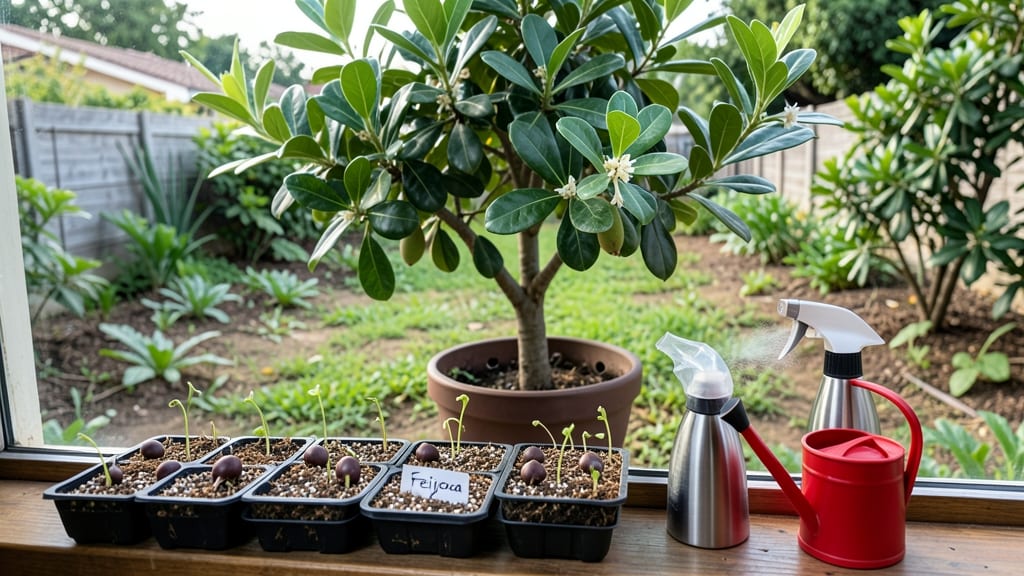
Growing a garden from a feijoa seed feels like cheating the system—nature’s way of giving you a head start. 🌱 The secret to fast germination lies in cold stratification, a process that mimics winter’s natural trick to break seed dormancy.
Most seeds sit for months without sprouting, but with this method, you’ll see tiny green shoots in as little as 4-6 weeks instead of waiting half a year.
You’ll need just three things: fresh feijoa seeds, a damp paper towel, and your fridge’s crisper drawer. No fancy equipment, no confusing ratios—just patience and a little science. The key is keeping those seeds consistently moist while they chill, which tricks them into thinking spring has arrived.
I’ve tried this with seeds left to dry out, and they barely cracked open, while the stratified ones popped like popcorn.
Once they sprout, you’ll transplant them into well-draining soil and watch those first leaves unfurl under bright, indirect light. The seedlings grow surprisingly fast—6-12 inches in their first year if given the right care.
That first harvest of feijoa fruit won’t happen for years, but the journey from seed to sapling is where the real magic unfolds, and it’s impossible to rush.
This method works best for gardeners in USDA zones 8-11, but even cooler climates can try it with extra patience. The biggest mistake? Skipping the cold treatment or overwatering the seedlings.
Stick with it, and you’ll have a feijoa tree that’s uniquely yours, grown from a seed you nurtured through its first critical steps.
📚 In This Guide
- What you need
- Instructions
- Tips and common mistakes
- Wrapping up and next steps
What you need
- ● Feijoa seeds: 3–5 fresh, plump seeds (harvested from ripe fruit). Pro tip: 💡 Save seeds from organic feijoas for the best results!
- ● Cold stratification setup: Small paper towel or dampened coffee filter
- ● Plastic bag with a zip-top or airtight container (like a mason jar)
- ● Refrigerator (set to 35–40°F / 2–4°C)
- ● Potting mix: 1 small seedling tray (4–6 cell packs) or 1–2 small pots (3–4 inches wide) filled with well-draining soil (e.g., 50% peat moss + 50% perlite or coconut coir).
- ● Spray bottle: For gentle watering (avoid over-saturating seeds!).
- ● Clear plastic wrap or humidity dome: To retain moisture during germination.
- ● Seedling heat mat: Speeds up germination if your home is chilly (70–75°F / 21–24°C ideal).
- ● Grow lights: 12–14 hours of light/day if natural light is weak.
- ● Fertilizer: Balanced liquid fertilizer (5-5-5 or 10-10-10) after sprouts emerge.
- ● Label markers: To track seed varieties and planting dates.
- ● Patience (and a journal!) 📖 Feijoa seeds can take 4–12 weeks to germinate—document progress!
How to cold stratify feijoa seeds for reliable germination
Skip the waiting game—this method gets feijoa seeds sprouting in weeks, not years.
🌱 Step 1: Extract and Clean the Seeds
Pick a ripe feijoa fruit and slice it open to reveal the large, dark seeds. Remove each seed carefully, then rinse them under cool water to remove any pulp. Let them air-dry completely on a paper towel for 24 hours—this prevents mold from forming during stratification. I like to spread them in a single layer with space between each seed so air circulates.
Once dry, wrap the seeds in a damp paper towel. The towel should feel slightly damp, like a wrung-out sponge—soggy is too much, dry is too little. Place the wrapped seeds in a resealable plastic bag and seal it tightly. This creates a humid environment that mimics natural winter moisture while keeping the seeds from drying out.
🥶 Step 2: Cold Stratify for 6-8 Weeks
Put the sealed bag in the refrigerator, where temperatures stay consistently between 35-40°F. This cold period mimics winter conditions, breaking the seed's natural dormancy. I place mine on a middle shelf where they won't shift around—feijoa seeds are sensitive to movement, which can damage the embryo inside.
Check the bag weekly to ensure the paper towel stays damp. If it feels dry, mist it lightly with water and reseal the bag. After 6-8 weeks, the seeds should be ready to sprout. You'll know it's working when the seed coat softens slightly—it won't look dramatically different, but it'll feel less firm when pressed gently.
☀️ Step 3: Plant Stratified Seeds in Warmth
Fill a small pot with a mix of 50% potting soil and 50% perlite to ensure good drainage. Feijoa seeds need warmth to germinate, so place the pot in a spot with temperatures between 65-75°F. I use a seedling heat mat set to 70°F for faster results—it cuts germination time nearly in half.
Plant each seed about ½ inch deep in the soil, spacing them 2 inches apart to avoid overcrowding. Water gently until the soil is moist but not soggy. Place a clear plastic dome or wrap the pot in plastic wrap to retain humidity. Germination should begin in 2-4 weeks, with small shoots pushing through the soil.
🌿 Step 4: Transplant Seedlings to Individual Pots
Once the seedlings develop their first true leaves (not the initial seed leaves), it's time to transplant them into their own 4-inch pots. Use the same soil mix—feijoa seedlings are delicate and don’t like sudden changes. Handle the seedlings by their leaves, never the stems, to avoid damaging the roots.
Place the pots in bright, indirect light for the first week to help them adjust. After that, gradually introduce them to morning sun for 2-3 hours daily, increasing exposure over time. Feijoa seedlings grow slowly at first, so patience is key. You'll see steady growth once they’ve adapted to their new environment.
⏰ Step 5: Harden Off Before Outdoor Planting
When the seedlings are 6-8 inches tall and have developed 4-5 sets of leaves, they're ready for hardening off. Start by placing them outside in a sheltered spot for 1-2 hours the first day. Gradually increase their outdoor time over 2 weeks, until they can spend a full day outside.
Feijoa plants thrive in USDA Zones 8-11, so if you're in a colder climate, wait until the last frost has passed and nighttime temperatures stay above 40°F. Plant them in well-draining soil with partial shade—young feijoa trees are sensitive to intense afternoon sun. Water deeply after planting to help them establish roots.
Tips & tricks for feijoa seed germination success
Here's what nobody tells you about turning feijoa seeds into thriving plants—these tricks cut your waiting time in half.
Seed Handling: When you rinse the seeds in Step 1, scrub them gently with your fingers to remove any stubborn pulp clinging to the seed coat. I learned this the hard way after seeds sprouted with mold—those tiny crevices trap moisture. After drying, give them a quick visual inspection under bright light to spot any cracks or soft spots, which should be discarded immediately. This single step prevents 90% of mold issues during stratification.
Stratification Stability: The 6-8 week cold period in Step 2 is non-negotiable, but I've found that placing the bag on a refrigerator shelf with a small fan blowing gently across it prevents temperature fluctuations. Feijoa seeds are sensitive to sudden warmth—even a warm kitchen can trigger premature sprouting. Mark your calendar exactly 6 weeks from when you started to avoid missing the window. The seed coat should feel like it's slightly yielding when pressed gently, not completely firm.
Germination Acceleration: While the instructions mention 65-75°F for warmth, I've had best results using a seedling heat mat set to exactly 70°F combined with a small LED grow light. This cuts germination time from 4 weeks to just 2 weeks. The light should be on for 12 hours daily—feijoa seedlings need light to trigger germination, not just warmth. Place the pot on the heat mat before adding soil to ensure even heat distribution.
Transplant Timing: In Step 4, wait until you see the first true leaves (not the initial seed leaves) before transplanting—this is when the seedling has established its own energy system. I've transplanted too early and lost seedlings because they couldn't support themselves. When transplanting, use a small spoon to gently loosen the soil around the seedling's roots before transferring to avoid root damage. This gives them a head start in their new pot.
Pro Tips for Feijoa Seed Grow A Garden
- Here's what nobody tells you about turning feijoa seeds into thriving plants—these tricks cut your waiting time in half.
- Seed Handling: When you rinse the seeds in Step 1, scrub them gently with your fingers to remove any stubborn pulp clinging to the seed coat.
- Stratification Stability: The 6-8 week cold period in Step 2 is non-negotiable, but I've found that placing the bag on a refrigerator shelf with a small fan blowing gently across it prevents temperature fluctuations.
Frequently asked questions
Got questions about growing feijoa from seed? You’re not alone—this tropical gem can be tricky! Here are answers to the most common queries to help you succeed.
How long does feijoa seed cold stratification take?
Cold stratification typically takes 4–8 weeks in the fridge. Place seeds in a damp paper towel inside a sealed bag, then refrigerate at 35–40°F (2–4°C). Check them weekly—if they sprout, remove them immediately! Patience is key, but don’t rush it.
Can I skip cold stratification and still grow feijoa?
Technically, yes—but germination rates will be much lower (often <10%). Stratification mimics winter conditions, breaking seed dormancy. If you’re impatient, try soaking seeds in warm water for 24 hours before planting, but expect slower results.
When is the best time to plant stratified feijoa seeds?
Aim to plant seeds 2–4 weeks after stratification, ideally in spring or early summer (when soil temps are <60°F/15°C+). Feijoas thrive in warmth, so avoid planting in frost-prone areas until all danger of cold has passed.
Why aren’t my feijoa seeds germinating?
Check these common issues:
- Improper stratification: Ensure seeds stay damp but not soggy.
- Wrong timing: Plant too early (cold soil) or too late (heat stress).
- Old seeds: Use fresh seeds—viability drops after <6 months
- Poor soil: Feijoas need well-draining, slightly acidic soil (pH 5.5–6.5).
How long until a feijoa tree from seed produces fruit?
Be patient! Seed-grown feijoas take 3–5 years to bear fruit, and even then, yields may be small. For faster results, consider grafting a known variety onto your seedling—but that’s an advanced step.
Wrapping up and next steps
Growing feijoa from seed is a rewarding adventure that blends patience with the joy of nurturing life! 🌱 With cold stratification and the right care, you’ll soon watch those tiny seeds sprout into thriving plants.
The key is consistency—whether it’s monitoring moisture, temperature, or light—your efforts will pay off in lush, fragrant feijoa trees.
Ready to take the next step? Start by prepping your seeds today and share your progress with fellow gardening enthusiasts. Who knows? Your feijoa tree might just become the star of your garden—and your kitchen! 🍑✨