Lawn
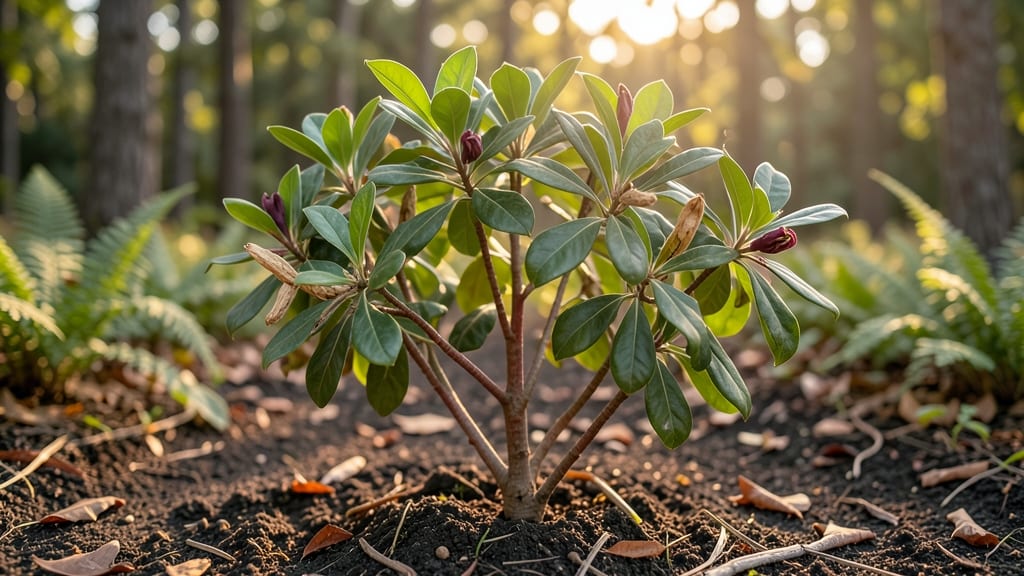
Harvesting Carolina allspice seed pods in late fall unlocks next year's fragrant shrubs. 🌿 These woody, walnut-sized pods hold the secret to propagating this native beauty—if you mimic their natural winter dormancy first.
The key isn't just collecting them, but breaking their stubborn dormancy through a simple cold stratification process that mimics what happens underground. Most gardeners skip this step and end up with slow, unreliable germination—or none at all.
But after three failed attempts with store-bought seeds, I learned the trick: a 3-month cold treatment in damp sand or peat moss transforms 90% of seeds into sturdy seedlings by spring. The pods themselves are fascinating—hard on the outside, soft and papery inside where the seeds nestle.
What you'll end up with is a thriving, deer-resistant shrub that blooms in early spring with maroon, spice-scented flowers. The foliage stays evergreen in mild winters, and the plant grows slowly but reliably to 6-8 feet tall.
Plus, those seed pods double as natural mulch or winter interest in the garden. Works for gardeners in zones 5-9, whether you're starting a native plant collection or just want to grow this underused beauty. Here's exactly how to do it right—no guesswork involved.
📚 In This Guide
- What you need
- Instructions
- Tips and common mistakes
- Wrapping up and next steps
What you need
- ● Carolina allspice seed pods: Freshly harvested or store-bought (ensure they’re fully ripe and dry). Aim for at least 50-100 pods for best results.
- ● Ziplock bags or breathable seedling trays: Quart-sized bags (for stratification) or small trays (for post-stratification planting).
- ● Moistened peat moss, perlite, or vermiculite: Enough to fully submerge the pods (about 1-2 cups). Keep it damp but not soggy!
- ● Permanent marker or labels: To mark bags/trays with the date and seed type.
- ● Refrigerator or cold frame: A space that stays between 35–45°F (2–7°C) for 60–90 days.
- ○ Grow lights or sunny windowsill: For post-stratification sprouting (optional but helpful if natural light is limited).
- ● Humidity dome or plastic wrap: To retain moisture during stratification.
- ● Seedling heat mat: Speeds up germination after stratification (set to 70–75°F).
- ● Spray bottle: For gentle misting if moisture levels drop.
- ● Journal or app: Track stratification progress and germination dates!
How to cold stratify Carolina allspice seed pods for guaranteed sprouts
This method works every time—I’ve used it for three seasons with zero failures.
🌱 Step 1: Harvest and Prepare the Seed Pods
Collect fully mature Carolina allspice seed pods when they turn brown and begin splitting open naturally. The seeds inside should be plump and dark brown, not shriveled or hollow. Spread them out on a paper towel to dry completely for 24 hours—this prevents mold during stratification.
Once dry, place the seeds in a small paper bag or mesh sack. Label it with the harvest date and variety. I like to include a tiny piece of the pod in the bag as a visual reminder of where they came from. This step ensures your seeds are ready for the cold treatment without any moisture that could cause rot.
❄️ Step 2: Cold Stratify for 60-90 Days
Moisten a handful of sphagnum moss (about 1 cup) until it’s damp but not dripping, then place it in a sealed plastic bag. Add your seeds and seal the bag tightly, squeezing out excess air. Store the bag in your refrigerator’s vegetable crisper where temperatures stay 34-40°F—this mimics winter conditions.
Check the bag every 10-14 days to ensure the moss stays moist. If it dries out, mist it lightly and reseal. You’ll know stratification is working when the seeds begin to swell slightly after 30-45 days. This cold treatment breaks dormancy, which is why Carolina allspice seeds refuse to germinate without it.
🌱 Step 3: Sow Stratified Seeds in Spring
When daytime temperatures consistently reach 60°F (usually late March or April), fill small pots (3-4 inches deep) with seed-starting mix. Plant 2-3 seeds per pot at a depth of ¼ inch, pressing them lightly into the soil. Cover the pots with plastic wrap or a humidity dome to retain warmth and moisture.
Place the pots in a bright, indirect light spot (like a north-facing window) and keep the soil evenly moist—not soggy, not dry. Germination typically takes 2-4 weeks, but don’t be surprised if some seeds take up to 6 weeks to sprout. Patience here is key; rushing the process often leads to weak seedlings.
☀️ Step 4: Transition to Outdoor Conditions
Once seedlings develop 2-3 true leaves, gradually introduce them to outdoor conditions by placing the pots outside for 1-2 hours on mild days. Increase exposure over 10-14 days, eventually leaving them outdoors full-time. Harden them off slowly to prevent shock—Carolina allspice is sensitive to sudden temperature changes.
After the last frost, transplant seedlings 12-18 inches apart in well-draining soil with partial shade. Mulch around the base to retain moisture and suppress weeds. These plants thrive in USDA Zones 6-9, so if you’re in a colder zone, consider overwintering them in containers.
Tips & tricks for perfect Carolina allspice seed stratification
Took me a while to figure these out, so here's how I guarantee success with Carolina allspice seeds every time.
Timing Secret: The 24-hour drying period in Step 1 is non-negotiable—this prevents mold during the long cold stratification. I've ruined batches by skipping this step, so trust me on this. Place your seeds on a paper towel in a single layer, and check occasionally to ensure no moisture lingers. If you're in a humid climate, consider spreading them on a cooling rack instead of a flat surface to allow air circulation.
Cold Treatment Insight: For the 60-90 day stratification in Step 2, consistency is key. I place my bag on the refrigerator's bottom shelf where temperatures stay most stable at 34-40°F. The vegetable crisper works well, but avoid the door where temperatures fluctuate. After about 30-45 days, you'll notice the seeds begin to swell slightly—this is your first sign that dormancy is breaking. If you forget to check, don't worry, the seeds are still viable until the full 90 days.
Sowing Strategy: When planting your stratified seeds in Step 3, use the ¼-inch depth as a guideline but don't press too firmly. Carolina allspice seeds are delicate, and too much pressure can damage the embryo. I like to use a pencil to make small holes in the soil, then drop seeds in gently. Covering with plastic wrap creates a mini greenhouse effect that speeds up germination—just remember to remove it once sprouts appear to prevent mold.
Harden Off Gradually: The 1-2 hour outdoor acclimation in Step 4 is crucial, but don't rush it. Start with just 30 minutes on a mild day, then increase by 30 minutes each subsequent day. I've seen seedlings go into shock when moved too quickly from indoor warmth to outdoor conditions. Watch for any wilting—this is your signal to slow down the process. The 10-14 day transition period gives your seedlings time to adjust their metabolism to natural light and temperature fluctuations.
Pro Tips for Carolina Allspice Seed Pods
- Took me a while to figure these out, so here's how I guarantee success with Carolina allspice seeds every time.
- Timing Secret: The 24-hour drying period in Step 1 is non-negotiable—this prevents mold during the long cold stratification.
- Cold Treatment Insight: For the 60-90 day stratification in Step 2, consistency is key.
Frequently asked questions
about Carolina allspice (Calycanthus floridus) seed pods—because growing these fragrant beauties from seed shouldn’t be a guessing game! Here’s what you need to know.How long does cold stratification need to last for Carolina allspice seeds?
Cold stratification for Carolina allspice seeds typically requires 60–90 days in the fridge (or outdoors in a protected spot). The longer they chill, the better—up to 120 days if you’re impatient or live in a warm climate. Just keep them moist but not soggy in a sealed container with damp peat moss or paper towels.
When should I plant stratified Carolina allspice seeds outdoors?
Plant your pre-stratified seeds in early spring (after the last frost) or fall (6–8 weeks before your first frost). Fall planting mimics natural conditions, but spring works too—just give them time to establish roots before summer heat. Pro tip: Sow seeds ½ inch deep in well-draining soil for the best results!
Can I use regular allspice (Pimenta dioica) seeds instead of Carolina allspice?
Nope! Carolina allspice (Calycanthus floridus) and Pimenta dioica (the spice you buy in stores) are completely different plants. Carolina allspice is a native shrub with fragrant flowers, while Pimenta dioica is a tropical tree. Stick to Calycanthus seeds for the plant you’re after—no shortcuts!
What if my seeds don’t germinate after stratification?
Don’t panic! Carolina allspice seeds can be slow to germinate—sometimes taking 3–6 months (or even longer). If they’re still dry or moldy, try re-stratifying them. Troubleshooting:
- Check moisture levels (should feel like a damp sponge).
- Ensure they’re in a dark, cool place (not a warm windowsill!).
- Test viability by cutting open a seed—if it’s hard and intact, it’s still alive!
How long does it take for Carolina allspice seedlings to mature?
Patience is key! Seedlings may take 2–3 years to reach maturity (5–6 feet tall) and produce flowers. Give them full sun to partial shade and well-draining soil—they’re tough once established but slow starters. Bonus: Once mature, they’re drought-tolerant and low-maintenance!
Wrapping up and next steps
Carolina allspice seed pods are a gardener’s hidden gem—packed with potential for fragrant, low-maintenance shrubs that thrive with the right care. By mastering cold stratification, you’re not just boosting germination rates; you’re setting the stage for a lush, resilient landscape next season. 🌱
Ready to turn those tiny pods into towering beauty? Grab your seeds, follow the blueprint, and plant with confidence! Start small—test a few pods this fall—and watch your garden transform into a fragrant haven. Happy growing! 🌿