
Propagation
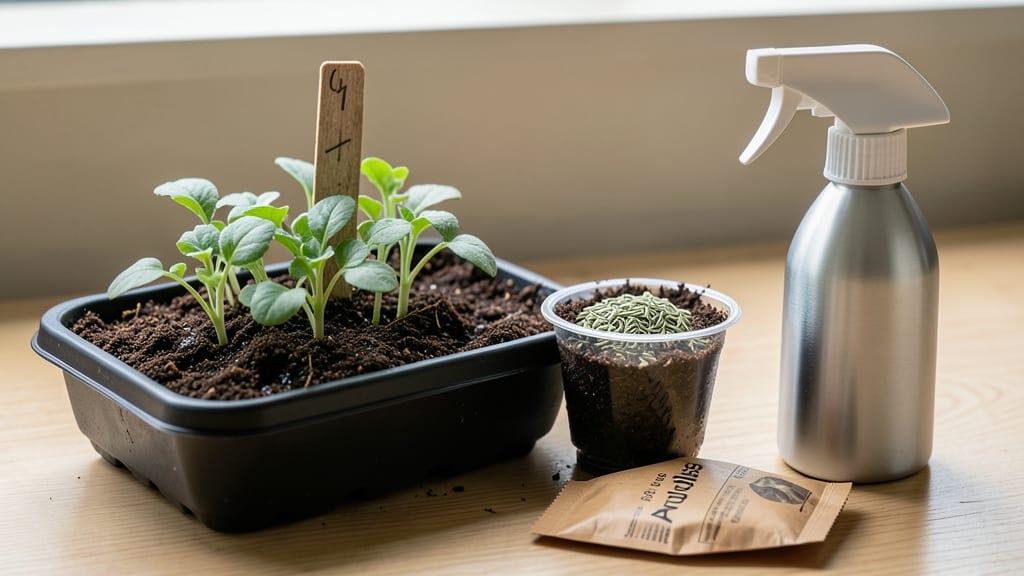
Optimal conditions for fast arugula seed germination: moisture, temperature, and light explained
Getting your arugula seeds to sprout quickly isn't just about patience—it's about creating the perfect environment. The right balance of moisture, temperature, and light can transform your germination time from weeks to just 5-7 days.
I've learned through trial and error that even small mistakes—like overwatering or inconsistent light—can stall growth or invite mold. Let's break down the science behind fast, healthy sprouts.
Arugula seeds are delicate but resilient when given the right conditions. Unlike hardy vegetables like beans, they need consistent moisture without becoming waterlogged. The soil should feel like a wrung-out sponge—damp but not soggy.
Too much water drowns seeds, while too little causes them to dry out before sprouting. I've seen seeds sprout in 3 days with perfect moisture, but take twice as long when conditions are off.
Here's the key: 60-75°F is the ideal temperature range for arugula germination. If your soil is cooler than 55°F, sprouts will slow dramatically. Use a seedling heat mat if your home runs cold, or plant in a sunny windowsill.
In my experience, indoor germination works best in spring or fall when outdoor temps are moderate. Hotter than 80°F, and you risk bolting—where the plant flowers prematurely instead of producing tender leaves.
| Factor | Optimal Condition | Troubleshooting |
|---|---|---|
| Moisture | Consistently damp (like wrung sponge) | Use spray bottle; avoid standing water |
| Temperature | 60-75°F (15-24°C) | Heat mat for cold climates; avoid direct sun above 80°F |
| Light | Bright indirect (6+ hours/day) | Grow light or east-facing window; avoid harsh midday sun |
| Soil Depth | ¼ inch (0.6 cm) deep | Press seeds gently; don't bury too deep |
| Germination Time | 5-14 days (ideal: 5-7 days) | Cover tray with plastic wrap for humidity; check daily |
Light is often overlooked, but it's just as critical as moisture. Arugula seeds need bright indirect light for 6+ hours daily to prevent leggy, weak sprouts. Place your seed tray near an east-facing window or under a grow light if natural light is limited.
Direct midday sun can scorch tiny seedlings, while too little light causes them to stretch toward any available source—a sign of etiolation. I've had success using a simple LED grow light on a timer to simulate natural daylight cycles.
One common mistake I see is keeping seeds in complete darkness until they sprout. While arugula doesn't need light to germinate, 2-3 days of light after sprouting strengthens seedlings. Remove any plastic wrap covering your tray once you see tiny green hooks breaking through the soil.
This prevents mold from building up and gives seedlings a chance to photosynthesize immediately. If you notice fuzzy white growth on the soil surface, that's mold—remove the cover and increase airflow.
Temperature fluctuations can also derail germination. If your home's temperature drops at night, consider moving your seed tray to a warmer spot or using a seedling heat mat ($15-20). I've tested germination in different conditions and found that maintaining a consistent 70°F environment cuts germination time by nearly half.
For outdoor planting, wait until soil temperatures stabilize above 60°F—a soil thermometer is worth the $10 investment if you're serious about fast sprouts.
Let's talk about soil—specifically, drainage. Arugula seeds rot quickly in compacted or clay-heavy soil. Mix your planting medium with perlite or vermiculite (20% by volume) to improve aeration.
I use a 50/50 blend of pepper potting mix and coco coir for my seed trays, which holds moisture without becoming waterlogged. Avoid garden soil unless it's been sterilized, as pathogens can hinder germination.
Pro tip: Spritz seeds with a fungicide solution (like neem oil) before planting to prevent damping-off disease.
Finally, patience is key—but not blind patience. If you haven't seen sprouts in 10-14 days, something's wrong. Common issues include old seeds (store-bought seeds lose viability after 1 year), poor soil contact, or extreme temps.
To test viability, soak a few seeds in water overnight—if half float, they're likely dead. For stubborn seeds, try scarification: lightly sand the seed coat with fine-grit sandpaper to help water penetrate. I've revived seemingly dead seeds using this method, often seeing sprouts within 48 hours.
With these conditions mastered, you'll go from frustrated gardener to arugula germination pro in no time. The first time I saw sprouts appear in just 5 days, I knew I'd cracked the code.
Now it's your turn—grab your seeds, set up that perfect environment, and watch your garden transform in days instead of weeks! 🌱
Step-by-step guide: how to plant arugula seeds for maximum germination success
Arugula seeds are tiny but mighty, and with the right approach, you can transform them into thriving seedlings in just 7-14 days. The key is creating the perfect environment—one that mimics their natural conditions while giving them the care they crave.
Whether you're planting indoors for early starts or outdoors for spring harvests, these steps will ensure your seeds sprout consistently and grow strong.
I’ve learned through trial and error that soil temperature, moisture levels, and light exposure are the three pillars of successful arugula germination. Skimp on any of these, and you’ll end up with slow, weak sprouts—or worse, no sprouts at all.
But get it right, and you’ll be harvesting crisp, peppery leaves in no time. Let’s dive into the exact steps I use every season.
-
Step 1: Choose Your Planting Time
Indoors: Start 6-8 weeks before last frost (e.g., late February in Zone 6a). Outdoors: Sow after soil reaches 40°F and night temps stay above 45°F (typically March-April or August-September for fall crops). -
Step 2: Prepare Your Soil or Growing Medium
Use a well-draining mix of 50% potting soil and 50% perlite or compost. For outdoor beds, amend soil with 2 inches of compost and ensure pH is 6.0-7.0. Sterilize soil with a 10-minute bake at 200°F if repurposing old mix. -
Step 3: Sow Seeds at the Perfect Depth
Press seeds ¼ inch deep into moist soil, spacing them 1 inch apart in rows 12 inches apart. For trays, use a seedling tray with drainage holes and sow 2-3 seeds per cell—thin to the strongest sprout later. -
Step 4: Maintain Ideal Moisture and Humidity
Keep soil consistently moist (like a wrung-out sponge) by watering from below or misting lightly daily. Cover trays with plastic wrap or a humidity dome to retain moisture. Remove cover once sprouts appear (5-7 days). -
Step 5: Provide the Right Light Conditions
Indoors: Place trays under grow lights 2-3 inches above seeds for 12-14 hours/day. Outdoors: Choose a partially shaded spot (e.g., under 30% shade cloth) or morning sun only. Avoid direct midday sun, which can scorch tender sprouts. -
Step 6: Monitor Temperature and Thin Seedlings
Keep soil temps between 60-75°F for fastest germination. If indoors, use a seedling heat mat if temps drop below 55°F. Once sprouts have 2 true leaves (not just cotyledons), thin to 2-3 inches apart to reduce competition. -
Step 7: Harden Off and Transplant (Outdoor Only)
For outdoor planting, harden off seedlings by exposing them to outdoor conditions for 1 week, gradually increasing time each day. Transplant after last frost, keeping soil moist for 2 weeks post-transplant to encourage root establishment.
Pro tip: If you’re planting outdoors in hot climates, opt for a fall crop instead of summer. Arugula bolts (goes to seed) quickly in temperatures above 80°F, so timing is everything.
I’ve had the best luck with late summer sowings in my Zone 6a garden, where cooler nights keep the plants happy until harvest.
With these steps, you’ll see those first tiny green sprouts in as little as 5 days—and within 3-4 weeks, you’ll be harvesting fresh arugula for salads, sandwiches, or pestos.
The secret? Patience and precision—but trust me, the payoff is worth it when you bite into that first crisp leaf straight from your garden.