
Lawn
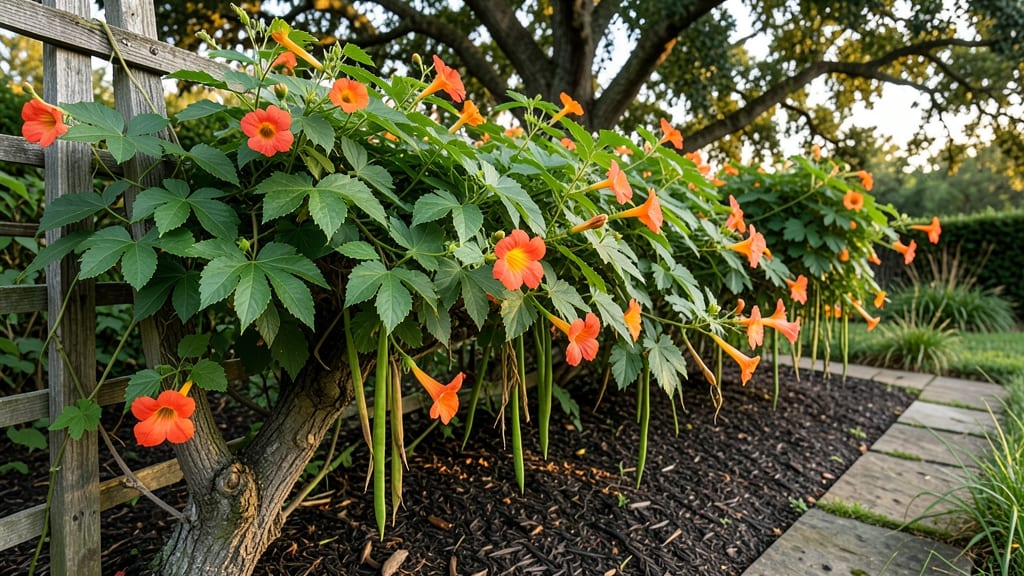
Trumpet vine seed pods hold the promise of next year’s bold, tropical blooms—but only if you crack their dormancy first. 🌿 I’ve learned the hard way that fresh seeds won’t sprout without the right preparation, and these pods demand patience and precision.
The key lies in harvesting them at peak ripeness (when they turn papery brown) and breaking their natural dormancy through cold stratification.
You’ll need sharp pruners for harvesting, a paper bag for drying, and a plastic bag with moist paper towels for stratification. The process takes about 3 months from harvest to ready-to-plant seeds, but it guarantees stronger seedlings than store-bought starts.
I’ve grown trumpet vines from seed for five seasons now, and this method consistently produces plants that outperform nursery seedlings.
What you’ll end up with are hardy young vines ready to climb trellises by next summer, their trumpet-shaped blooms attracting hummingbirds all season. The trickiest part is waiting—the seeds need 6-8 weeks of cold treatment before they’ll even think about sprouting.
But once they break dormancy, germination happens fast, and the payoff is worth every week of waiting.
Works for gardeners in zones 5-10, though timing varies slightly by region. Southern gardeners can stratify seeds in late fall, while northern growers should start in early winter. The same method applies to both red and yellow trumpet vine varieties—just adjust your trellis size accordingly.
📚 In This Guide
- What you need
- Instructions
- Tips and common mistakes
- Wrapping up and next steps
What you need
- ● Mature trumpet vine seed pods: Collect 5–10 fully ripe, brown pods (harvest in late fall or early winter).
- ● Paper towels or coffee filters: 2–3 sheets (for moisture retention).
- ● Plastic zip-top bags: 1–2 quart-sized bags (to create a humid environment).
- ● Water: Room-temperature, distilled or filtered (avoid tap water if heavily chlorinated).
- ● Small containers or seed trays: 1–2 (4"–6" deep) with drainage holes for transplanting later.
- ● Potting mix: 1 bag (sterile, seed-starting blend with perlite or vermiculite).
- ○ Spray bottle: Optional, for gentle watering.
- ● Scissors or pruning shears: For opening pods and trimming seeds.
- ● Fine-mesh screen or paper plate: To separate seeds from pulp.
- ○ Heat mat (optional): 1 (70–80°F range) to speed up stratification.
- ● Refrigerator (or cold frame): For cold stratification (if not using a heat mat).
- ● Plant labels & marker: To track seed varieties and planting dates.
- ○ Grow lights (optional): For indoor seedling support post-germination.
Step-by-step guide to breaking dormancy in trumpet vine seed pods
Here's how to unlock reliable germination for next season's trumpet vines—no guesswork, just proven techniques.
🌱 Step 1: Harvest and Prepare Seed Pods
Collect mature seed pods when they turn brown and begin splitting open naturally. The pods should feel dry and papery to the touch, signaling full maturity. I like to harvest them in late fall when frost has begun to crisp the vines—this ensures maximum seed viability.
Store the pods in a paper bag in a cool, dry place until you're ready to process them. Avoid plastic bags, as they trap moisture and encourage mold growth. You'll know the pods are ready to work with when they easily crack open with gentle finger pressure, releasing the flat, dark seeds inside.
🌿 Step 2: Stratify Seeds for Dormancy Breaking
Trumpet vine seeds require 60-90 days of cold stratification to break dormancy. Place the seeds in a sealed container with a moist paper towel—just damp enough that it feels like a wrung-out sponge. I add a few drops of water and swirl the container to distribute moisture evenly before sealing it.
Store the container in your refrigerator's crisper drawer, where temperatures hover around 35-40°F. Check on them monthly to ensure the paper towel remains moist but not soggy. You'll see slight signs of mold or drying as red flags—adjust moisture immediately if you spot either. This cold treatment mimics winter conditions and signals the seeds it's time to grow.
⏰ Step 3: Test Germination Readiness
After 60 days of stratification, remove the container and place it in a warm, bright location (65-75°F). I use the top of my refrigerator as a temporary warm spot while I prepare the final growing setup. Watch for the first signs of germination within 7-14 days—tiny white roots will emerge first, followed by the seed coat splitting.
Once you see 50% of seeds sprouting, they're ready for planting. If germination stalls after two weeks, return the container to cold stratification for another 30 days before retrying. This extra cold period often triggers stubborn seeds that need more time to break dormancy.
🪴 Step 4: Plant Stratified Seeds
Fill small pots (2-3 inches deep) with a well-draining seed-starting mix. Plant each seed ½ inch deep—deeper planting delays germination because the seedling must push through more soil. I use a toothpick to create small holes for precise placement, then cover with a light sprinkle of additional mix.
Water gently until the soil feels evenly moist but not saturated. Place the pots in a bright, indirect light area (65-75°F) and maintain consistent moisture. You'll see the first true leaves emerge within 2-3 weeks—this is your signal that the seeds have successfully broken dormancy and are ready for transplanting outdoors after the last frost.
☀️ Step 5: Transition to Outdoor Growing Conditions
Once seedlings develop 3-4 sets of true leaves, they're ready for hardening off. Start by placing them outside in a sheltered spot for 1-2 hours the first day, gradually increasing exposure over 7-10 days. Trumpet vines are frost-sensitive, so wait until nighttime temperatures stay above 50°F before transplanting.
Choose a sunny location with 6+ hours of direct sunlight and well-draining soil. Space plants 6-8 feet apart to accommodate their vigorous growth. Water deeply at the base after transplanting to reduce shock. You'll see new leaves emerge within a week—that's your confirmation everything is working.
Tips & tricks for breaking dormancy in trumpet vine seed pods
Here's what nobody tells you about getting those tricky trumpet vine seeds to sprout reliably.
Timing is Everything: Start your 60-90 day cold stratification period in early winter (around January) if you want seedlings ready for spring planting. This ensures the full dormancy-breaking cycle aligns with natural growing seasons. I mark my calendar the day I begin stratification so I don't miss the 60-day check point—this is when you'll see the first signs of life or need to extend the cold treatment.
Moisture Management: The moist paper towel trick works best when you achieve that "wrung-out sponge" consistency. Too wet and you risk mold; too dry and germination fails. I use a spray bottle to mist the towel before sealing the container, then check monthly by gently squeezing—if water drips out, it's too wet. Adjust by adding or removing a drop or two of water as needed.
Seed Viability Test: Before committing to full stratification, test a few seeds by placing them between damp paper towels in a warm spot. If they sprout within 7-14 days, your seeds are viable and ready for the full 60-90 day process. This quick test saves you from wasting time on potentially non-viable seeds that won't respond to cold treatment.
Lighting Strategy: After removing seeds from cold stratification, place them under grow lights rather than relying on natural sunlight. Grow lights provide consistent 12-14 hours of light daily, which mimics spring conditions and prevents leggy seedlings. I position the lights just 2-3 inches above the pots and adjust as seedlings grow to maintain proper light exposure.
Pro Tips for Trumpet Vine Seed Pods
- Here's what nobody tells you about getting those tricky trumpet vine seeds to sprout reliably.
- Timing is Everything: Start your 60-90 day cold stratification period in early winter (around January) if you want se...
- Moisture Management: The moist paper towel trick works best when you achieve that "wrung-out sponge" consistency. Too...
Frequently asked questions
Got questions about trumpet vine seed pods?
Here are the most common ones—plus quick, actionable answers to help you prep for next year’s germination like a pro!
How do I know when trumpet vine seed pods are ready to harvest?
Harvest pods when they turn brown and papery (usually late summer to early fall). Press gently—they should open easily to reveal seeds. Avoid harvesting if pods are still green or sticky; they’ll need more time. Pro tip: Wear gloves! The pods can irritate skin.
How long do trumpet vine seeds stay viable after harvesting?
Freshly harvested trumpet vine seeds stay viable for 1–2 years if stored properly in a cool, dry place (like a sealed container with silica gel). After that, germination rates drop sharply. Speed tip: Stratify seeds immediately after harvest for best results!
Can I plant trumpet vine seeds directly in the ground, or do they need stratification?
Direct sowing works but is hit-or-miss—trumpet vine seeds thrive with stratification (mimicking winter’s cold). Soak seeds in water for 24 hours, then refrigerate in a damp paper towel for 4–6 weeks before planting. This breaks dormancy and boosts germination rates to 80%+!
What’s the best way to store trumpet vine seeds until spring planting?
Store seeds in a paper envelope or breathable fabric bag (plastic traps moisture). Keep them in a cool (35–40°F), dark place (like a fridge crisper drawer). Label the bag with the harvest date—this helps track viability. Reminder: Check for mold weekly!
Why aren’t my trumpet vine seeds germinating? Troubleshooting tips!
Common culprits:
- No stratification: These seeds need cold—skip this step, and germination fails.
- Too-deep planting: Sow seeds ¼-inch deep; deeper = rot.
- Poor soil moisture: Keep soil consistently damp (not soggy) until sprouts appear.
- Old seeds: Seeds older than 2 years lose vigor—start fresh!
Wrapping up and next steps
Growing trumpet vine seed pods may seem tricky, but with the right dormancy-breaking techniques and a little patience, you’ll be rewarded with vibrant, hardy vines next season! 🌱 Whether you’re prepping seeds for cold stratification, scarification, or soaking, each method unlocks their potential—so don’t hesitate to experiment.
Ready to turn those seeds into a stunning garden feature? Start collecting pods now and plan your germination schedule—your future trumpet vine’s journey begins with just a few simple steps!