
Lawn
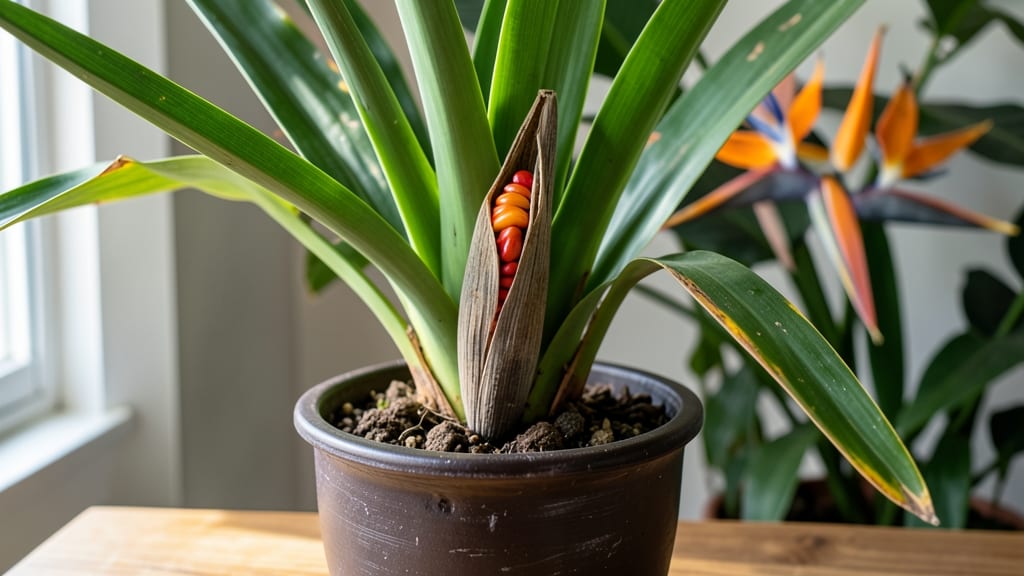
That orange seed pod is your ticket to next year’s tropical drama. 🌺 Bird of paradise seeds need patience—harvesting them at the right moment means the difference between a thriving new plant and wasted effort.
The pods turn from green to bright orange when ready, usually in late fall, and each contains dozens of seeds just waiting for their chance to grow.
Start by carefully slicing open the pod with a sharp knife—no need to rush, these seeds aren’t going anywhere. Once out, spread them on a paper towel in a warm, dry spot for 3-4 days to let the outer coating dry slightly.
This step prevents mold and sets you up for the cold stratification that mimics winter’s natural cycle, breaking seed dormancy for stronger germination.
After drying, place the seeds in a sealed bag with slightly damp sand or peat moss, then refrigerate for 6-8 weeks. This mimics the plant’s native winter, tricking the seeds into thinking spring has arrived.
When you plant them in well-draining soil, keep it consistently moist but never soggy—you’ll see tiny sprouts in 8-12 weeks, each one a promise of those iconic orange-and-blue blooms.
Here’s the thing—bird of paradise seeds are finicky. Not all will germinate, and some may take months longer. But when they do, you’ll have a disease-resistant, fast-growing plant that thrives in zones 10-12 (or indoors if you’re cooler).
The key is consistency: light, warmth, and a little extra care during those first few months make all the difference.
📚 In This Guide
- What you need
- Instructions
- Tips and common mistakes
- Wrapping up and next steps
What you need
- ● Mature bird of paradise seed pods: 3–5 fully ripe pods (brown, dry, and slightly papery).
- ● Sharp pruning shears or scissors: Sterilized, for clean pod removal.
- ● Paper towels or newspaper: For drying and separating seeds.
- ○ Small paper bags or mesh breathable bags: 1–2 bags for seed storage (optional but helpful).
- ● Plastic zip-top bags or airtight containers: For cold stratification (quart-sized or larger).
- ● Refrigerator or cold stratification setup: Consistent 35–45°F (2–7°C) for 6–12 weeks.
- ● Planting trays or small pots: 2–3" deep, with drainage holes (for germination).
- ● Well-draining potting mix: Cactus/succulent blend or 50% perlite/sand mix.
- ● Spray bottle with water: For gentle seed moisture control.
- ● Plant labels & marker: To track seed varieties and planting dates.
- ● Seed germination mat: For warmth during sprouting (75–85°F ideal).
- ● Humidity dome or plastic wrap: To retain moisture while seeds germinate.
- ● Grow lights: If natural light is limited (12–16 hours/day).
- ● Fungicide (mild): Like hydrogen peroxide (3%) to prevent mold if pods are damp.
- ● Journal/notebook: To log stratification progress and germination timelines.
Step-by-step guide to harvesting and processing bird of paradise seed pods
Here’s how to turn those dramatic seed pods into next year’s thriving plants—no fancy tools needed.
🌱 Step 1: Harvest the Seed Pods at Peak Ripeness
Wait until the pods turn a deep brown and begin to split open naturally—this usually happens in late fall or early winter. If you harvest too early, the seeds won’t be fully mature, and if you wait too long, they’ll scatter on their own. Gently twist the pod to release it from the stem, then place it in a paper bag to catch any seeds that fall out.
I always check for soft spots or cracks—these indicate the pod is ready. Avoid harvesting from pods that are still green or firm, as the seeds inside won’t germinate well. Once collected, label the bag with the date to track how long they’ve been drying.
💧 Step 2: Dry the Seeds Thoroughly to Prevent Mold
Spread the pods out on a wire rack or paper towels in a warm, dry, and well-ventilated area. Keep them out of direct sunlight to avoid overheating, which can damage the seeds. It typically takes 2-3 weeks for the pods to fully dry—they’ll feel light and brittle when ready.
Once dry, open the pods carefully with your fingers or a small knife. Remove any remaining seeds and discard the empty pod material. Store the seeds in a paper envelope (not plastic—it traps moisture) in a cool, dark place until you’re ready to stratify them.
⏰ Step 3: Cold Stratify the Seeds for Better Germination
Place the dried seeds in a sealed plastic bag with a moistened paper towel at the bottom. This keeps them hydrated but prevents rot. Put the bag in the refrigerator for 4-6 weeks—this mimics the winter chill period the seeds need to break dormancy. Check the towel weekly and mist it if it dries out.
Here’s the thing—skipping stratification means you’ll likely wait months for germination, if it happens at all. The cold treatment tricks the seeds into thinking winter has passed, so they’ll sprout faster and more reliably once planted.
🌿 Step 4: Plant the Stratified Seeds in Potting Mix
Fill a small pot with well-draining potting mix (bird of paradise hates soggy roots) and plant the seeds ½ inch deep. Water lightly until the soil is moist but not soggy. Place the pot in a warm, bright spot (like a sunny windowsill) and cover it loosely with plastic wrap to retain humidity. Keep the soil consistently moist—not dripping wet—until germination.
Germination can take 4-8 weeks, so patience is key. Once the first true leaves appear, remove the plastic wrap and move the seedlings to a south-facing window or under a grow light for 12-14 hours of light daily. Weak, leggy seedlings mean the light isn’t strong enough—adjust as needed.
Tips & tricks for perfect bird of paradise seed pod processing
These simple tricks will help you maximize your success with bird of paradise seeds—from harvest to sprouting.
Timing is Everything: Harvest pods only when they're deep brown and naturally splitting—this usually happens in late fall or early winter. I’ve learned the hard way that green pods contain immature seeds that won’t germinate. The soft spots and cracks are your best indicators of readiness. Once you’ve collected them, label your paper bag with the harvest date to track drying progress.
Drying Strategy: Spread pods on a wire rack or paper towels in a warm, well-ventilated area—never direct sunlight. The 2-3 week drying period is crucial for preventing mold while ensuring seeds are fully mature. I like to give them a gentle shake every few days to release any seeds that might be trapped inside prematurely. When they feel light and brittle, they’re ready to open.
Stratification Secret: The 4-6 week refrigerator cold treatment is non-negotiable for bird of paradise seeds. I place them in a sealed bag with a moistened paper towel to keep them hydrated without rotting. Check the towel weekly and mist if needed—this mimics winter conditions and breaks seed dormancy. Skipping this step means you might wait months for germination, if it happens at all.
Planting Precision: When planting your stratified seeds ½ inch deep, use well-draining potting mix—bird of paradise roots hate soggy conditions. I always water lightly until the soil is moist but not dripping, then cover with plastic wrap to retain humidity. The 12-14 hours of daily light requirement is critical for strong seedlings. If you notice leggy growth, it’s a sign your seedlings need more light intensity.
Pro Tips for Bird Of Paradise Seed Pod
- These simple tricks will help you maximize your success with bird of paradise seeds—from harvest to sprouting.
- Timing is Everything: Harvest pods only when they're deep brown and naturally splitting—this usually happens in late ...
- Drying Strategy: Spread pods on a wire rack or paper towels in a warm, well-ventilated area—never direct sunlight. Th...
Frequently asked questions
Got questions about harvesting, drying, or cold-stratifying bird of paradise seed pods? You’re not alone! Here are the most common concerns—plus quick, practical answers to keep your tropical beauty thriving.
How do I know when bird of paradise seed pods are ready to harvest?
The pods are ready when they turn brown and papery (not green!) and split open slightly on their own. If you pry them open too early, the seeds inside won’t be fully mature. Aim for late fall or early winter in warm climates—just before the first frost if you’re in a cooler zone.
How long does it take to dry bird of paradise seed pods?
Drying takes 2–4 weeks in a well-ventilated, shady spot (like a mesh bag or paper sack). Flip the pods occasionally to prevent mold. If your climate is humid, speed things up with a fan on low or a dehumidifier. Avoid direct sunlight—it can scorch the pods!
What’s the best way to cold-stratify these seeds?
Mix seeds with moist peat moss or perlite in a sealed bag, then refrigerate for 6–8 weeks at 35–40°F. Check moisture weekly—it should stay damp, not soggy. After stratification, sow seeds shallowly (¼ inch deep) in warm soil (70–75°F) for germination. Patience pays off—germination can take 4–12 weeks!
Can I grow bird of paradise from seed instead of buying plants?
While it’s slower (seedlings take 3–5 years to bloom vs. 1–2 years for nursery plants), it’s rewarding—and free! Just know that seed-grown plants may not be true to the parent’s color (e.g., orange vs. blue flowers). For guaranteed results, start with a named cultivar if possible.
What if my seed pods mold or rot during drying?
Mold or rot usually means too much humidity or poor airflow. Act fast: Discard moldy pods immediately (don’t salvage seeds—they won’t sprout). For future batches, try a food dehydrator on low (115°F) or a well-ventilated greenhouse. If your climate is stubbornly damp, speed up drying with silica gel packets in the storage bag.
Do bird of paradise seeds need a special soil mix for germination?
Not necessarily! A light, fast-draining mix works best—think 50% peat moss, 30% perlite, and 20% sand. Avoid heavy garden soil, which can cause rot. Keep the mix moist but not waterlogged, and use a clear plastic dome or humidity tray to retain warmth. Once sprouts appear, reduce humidity gradually to toughen seedlings.
Wrapping up and next steps
Growing bird of paradise from seed pods is a rewarding journey that connects you to nature’s beauty—one stunning bloom at a time! 🌱 By mastering the art of harvesting, drying, and cold stratifying these pods, you’re not just nurturing a plant; you’re cultivating a legacy of vibrant, tropical elegance for seasons to come. Ready to turn your patience into paradise?
Your next step? Grab those dried seed pods, follow the steps above, and let nature do the rest. In just a few months, you could be watching your very own bird of paradise push through the soil—proof that great things grow from small, patient beginnings!