
Planting
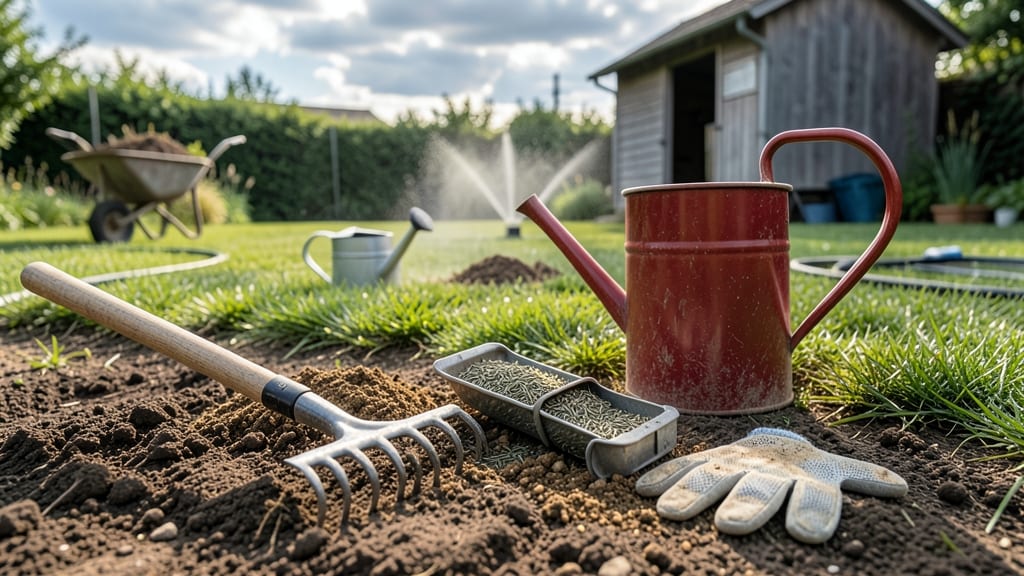
Planting grass seed in spring is all about timing—get it right, and you'll have a lush lawn by summer. 🌱 The exact moment depends on your zone, but the rule is simple: wait until the soil warms to 55°F and stays reliably above freezing at night.
I learned this the hard way after planting too early and watching seedlings freeze in a late-spring frost.
Most zones can start between mid-April and early June, but check your local frost dates. Soil prep is key—remove debris, loosen the top 2-3 inches, and mix in compost for better seed contact.
A light raking creates the perfect texture for seeds to nestle into without being buried too deep.
You'll see sprouts in 7-21 days, depending on the grass type and weather. Warm-season grasses like Bermuda grow fastest in heat, while cool-season grasses like Kentucky bluegrass thrive when planted earlier. The payoff? A thick, green lawn that outcompetes weeds naturally.
For best results, keep soil moist (not soggy) for the first 3 weeks. A sprinkler on a gentle setting works better than heavy watering, which can wash seeds away. Whether you're seeding a full yard or a small patch, this timing trick works every time.
📚 In This Guide
- What you need
- Instructions
- Tips and common mistakes
- Wrapping up and next steps
What you need
- ● Grass seed: Choose a type suited to your climate (e.g., Kentucky Bluegrass, Fescue, or Bermuda). Buy 10–20 lbs per 1,000 sq ft for full coverage.
- ● Soil test kit: Check pH levels (ideal: 6.0–7.0) and nutrient balance before planting.
- ● Topsoil or compost: 1–2 inches to improve soil quality and seed-to-soil contact.
- ● Rake: A garden rake with 1/4-inch tines for leveling and aerating soil.
- ○ Lawn roller (optional but helpful): A lightweight 30–50 lb roller to press seed into soil.
- ● Water source: Hose with a gentle spray nozzle or a watering can for consistent moisture.
- ● Fertilizer (starter blend): Look for a high-phosphorus (P) formula (e.g., 5-10-10 or 10-20-10).
- ● Broadcast spreader: For even seed distribution (manual or electric for large areas).
- ● Garden gloves: Protect your hands from soil and sharp debris.
- ● Mulch (straw or peat moss): 1/4-inch layer to retain moisture and protect seeds from birds.
- ○ Weed barrier cloth: Optional for areas with persistent weeds (landscape fabric with holes).
- ● pH adjusters: Lime (to raise pH) or sulfur (to lower pH) if soil test recommends it.
- ● Weather forecast: Check for 5+ days of dry, warm weather after planting!
Step-by-Step guide for planting grass seed in spring
Timing matters more than you think—get this wrong, and you'll waste seed or invite weeds.
🌱 Step 1: Check Your Frost Dates and Soil Temperature
First, confirm your last frost date for your USDA hardiness zone—this is your absolute deadline. I always check the National Weather Service or local extension service for precise dates. Planting too early when soil temperatures dip below 50°F slows germination and invites rot. Wait until daytime temps consistently stay above 60°F and nighttime temps don't drop below 45°F.
Here's the thing—soil temperature matters more than air temperature. Stick a soil thermometer 2 inches deep in the ground. Grass seed needs soil that's at least 55°F to sprout reliably. If your thermometer reads lower, wait another week—your seed won't thank you for rushing.
🌱 Step 2: Prepare the Soil for Optimal Seed Contact
Remove any existing weeds or grass by hand or with a broadfork—don't use herbicides before planting, as they'll linger and kill your new seed. Loosen the top 4 inches of soil with a rake or tiller, breaking up any compacted layers. The goal is to create a seed bed that's fine and crumbly, like cake batter—not powdery like flour.
Level the area with a drag rake, then spread 1/2 pound of 10-10-10 fertilizer per 100 square feet evenly. Work it into the top inch of soil. This gives your grass roots a nutrient boost right when they need it. If your soil tests acidic (pH below 6.0), sprinkle lime at the rate of 20 pounds per 1000 square feet and work it in—grass loves slightly acidic to neutral soil.
💧 Step 3: Spread Seed Evenly and Lightly Cover
Use a broadcast spreader for large areas or hand-scatter for small patches. For cool-season grasses like fescue or bluegrass, aim for 4-6 pounds per 1000 square feet. Warm-season grasses like Bermuda or Zoysia need 5-8 pounds per 1000 square feet. I like to spread half the seed in one direction, then the other half perpendicular—this prevents clumps and ensures even coverage.
Once spread, lightly rake the area with a stiff-bristled rake to cover the seed with 1/4 inch of soil. This protects seeds from drying out and birds stealing them. Don't bury them deeper—grass seed needs light to germinate, and too much soil smothers it. After covering, gently press the soil with a lawn roller or your feet to ensure good seed-to-soil contact.
☀️ Step 4: Water Consistently Until Germination
Keep the soil surface moist but never soggy for the first 10-14 days. Water lightly twice daily—morning and late afternoon—for 10-15 minutes per session until you see 50% germination. You'll know it's working when you spot tiny green blades about 1/4 inch tall. If the soil dries out, seeds die; if it's too wet, they rot.
Once germination begins, reduce watering to once daily for 15-20 minutes and gradually increase to 1 inch per week once the grass reaches 2-3 inches tall. I use a rain gauge to track moisture—this prevents overwatering, which is a common mistake that leads to fungal diseases.
✂️ Step 5: Maintain New Growth and Prevent Weeds
Wait until your new grass reaches 3-4 inches tall before mowing—this usually takes 6-8 weeks after planting. Set your mower blade to 3-4 inches high and never remove more than 1/3 of the blade height at a time. This encourages deep root growth and prevents stress.
Keep an eye out for weeds creeping in during the first growing season. Hand-pull any dandelions or clover before they set seed. If you need to fertilize, wait until the grass has been mowed 3 times—this gives roots time to establish. Use a slow-release nitrogen fertilizer at half the recommended rate to avoid burning tender new grass.
Tips & tricks for perfect spring grass planting timing
Between us, planting grass seed at the wrong time is like throwing money into the wind—here's how to avoid that heartbreak.
Zone-Specific Timing: Your USDA hardiness zone determines everything. For example, Zone 5 gardeners should wait until mid-May when soil hits 55°F, while Zone 8 can start as early as February. I always double-check the National Weather Service for my exact last frost date—it's the absolute deadline. Remember, soil temperature matters more than air temperature, so that 2-inch deep reading is your true guide.
Soil Prep Secret: In Step 2, when you're loosening that top 4 inches of soil, don't just scratch the surface—aim for a texture like cake batter. Compacted soil blocks roots and leads to patchy growth. For clay-heavy soils, mix in 1/2 inch of compost to improve drainage. And here's what nobody tells you—if your soil tests acidic (pH below 6.0), that lime application (20 pounds per 1000 square feet) isn't optional; it's the difference between struggling grass and lush green coverage.
Seed Coverage Technique: That 1/4-inch soil covering in Step 3 is critical—any deeper and you'll smother your seeds. I use a metal ruler to verify depth after raking. For slopes or windy areas, consider a thin layer of straw mulch after planting to prevent erosion while keeping seeds protected. This works especially well for cool-season grasses like fescue that need consistent moisture during germination.
Watering Watch: During those first 10-14 days, your twice-daily 10-15 minute sessions are non-negotiable. I set a timer so I don't forget—consistent moisture prevents seeds from drying out or rotting. Once germination begins (those tiny 1/4-inch blades), switch to once-daily watering but keep it light. The key is to keep the top inch of soil damp, not soggy. A rain gauge helps track when you can reduce to that 1-inch weekly maintenance rate.
Pro Tips for When Plant Grass Seed In Spring
- Between us, planting grass seed at the wrong time is like throwing money into the wind—here's how to avoid that heart...
- Zone-Specific Timing: Your USDA hardiness zone determines everything. For example, Zone 5 gardeners should wait until...
- Soil Prep Secret: In Step 2, when you're loosening that top 4 inches of soil, don't just scratch the surface—aim for ...
Frequently asked questions
about planting grass seed in spring—because even the best-laid lawn plans need a little clarification!What if spring arrives late in my area?
If frost lingers or spring feels delayed, don’t panic! Wait until soil temps hit at least 50°F (10°C) for 3–5 days straight. Cool-season grasses (like fescue or ryegrass) can handle light frost, but warm-season grasses (like Bermuda) need warmer soil. Check your local frost-free date and adjust accordingly.
Can I plant grass seed too early in spring?
Yes—but it’s risky! Planting before soil warms can lead to poor germination or seed rot. If you’re eager to start, cover seeds with a light layer of straw until conditions improve. For most regions, aim for late April to early June (after the last frost). Patience pays off for a lush lawn!
What’s the best grass seed mix for my climate?
Your choice depends on your USDA hardiness zone and lawn use:
- Cool climates (Zones 2–6): Tall fescue or Kentucky bluegrass (tough, drought-tolerant).
- Warm climates (Zones 7–10): Bermuda or Zoysia (heat-loving and low-maintenance).
- Shady areas: Fine fescue or creeping red fescue (thrives with less sun).
How often should I water new grass seed in spring?
Keep soil consistently moist (not soggy!) for the first 2–3 weeks. Water lightly 2–3 times daily (about 5–10 minutes per session) to encourage germination. Once sprouts appear, gradually reduce to 1 inch (2.5 cm) per week. A sprinkler with a rain gauge helps track moisture levels.
What do I do if weeds pop up before grass grows?
Weeds are normal early on, but don’t let them steal nutrients! Hand-pull them before they seed, or spot-treat with a vinegar-based herbicide (safe for young grass). Once your lawn reaches 3–4 inches tall, thick grass will outcompete weeds naturally. Pre-emergent herbicide can also help—apply after seeding but before weeds sprout.
Wrapping up and next steps
Spring is the perfect time to transform your lawn into a lush, green oasis—and you’ve got all the know-how now! 🌱 Whether you’re in Zone 3 or Zone 10, timing your grass seed planting just right ensures a thriving lawn all season long.
Remember: prep your soil, choose the right seed, and stay patient as nature works its magic. Ready to roll up your sleeves? Grab your tools, mark your calendar, and start planting before your local frost-free date! Your future lawn will thank you—one blade at a time. 🌿✨