
Planting
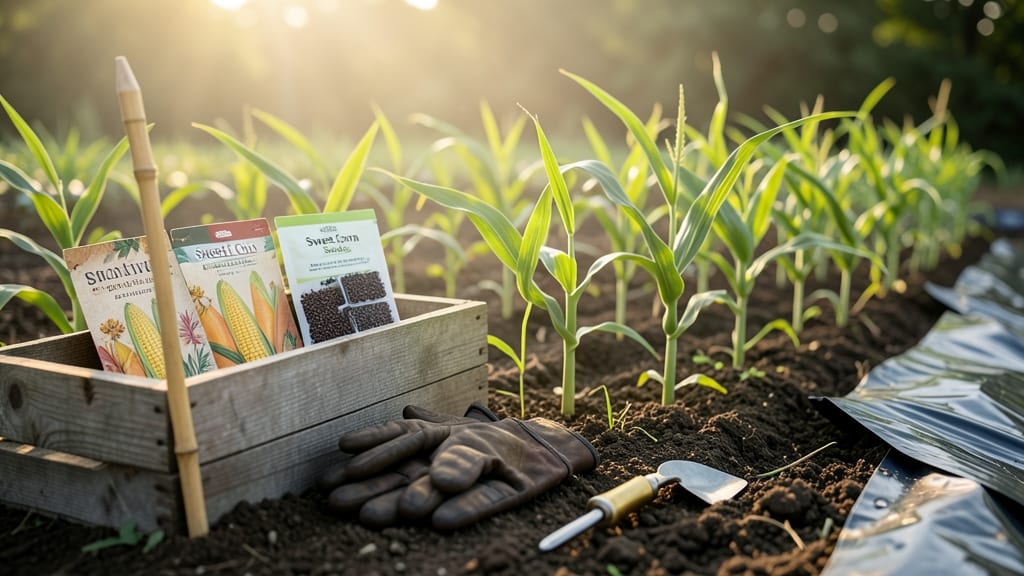
Sweet corn seed spacing is the secret weapon behind that jaw-dropping harvest you see in neighbors' gardens—12-inch in-row spacing and 30-inch between rows is where the magic happens. 🌽 I learned this the hard way after my first overcrowded patch produced just 18 ears instead of the 50 I'd hoped for.
The right spacing means more sunlight, less competition, and corn that grows tall and strong instead of scrappy and weak.
Start with well-drained soil rich in compost—corn is a heavy feeder, and proper spacing won't help if the ground is poor. Most home gardeners plant in blocks (not single rows) to improve pollination, which means spacing seeds in a 4x4 or 5x5 grid within your rows.
This ensures every plant gets enough air circulation, reducing fungal diseases that thrive in crowded conditions.
By following these spacing rules, you'll see plants reaching 6-7 feet tall with ears forming high on the stalk—far more productive than the stunted, low-yielding plants from overcrowded beds.
The ears themselves will be plump, sweet, and ready to harvest in just 70-80 days from planting, not the 90+ days you get from stressed plants.
Works for all sweet corn varieties—whether you're growing bicolor, golden, or super-sweet types—and adapts to small gardens by using wider row spacing and fewer plants per row. Here's how to make it work for your space.
📚 In This Guide
- What you need
- Instructions
- Tips and common mistakes
- Wrapping up and next steps
What you need
- ● Sweet corn seeds – Choose a high-quality, disease-resistant variety (e.g., Silver Queen, Peaches and Cream, or Ambrosia). Aim for 1.5–2 pounds per 100 feet of row (adjust based on seed size).
- ● Garden soil or raised bed mix – Well-draining, fertile soil with a pH of 6.0–7.0. Test your soil and amend with compost or aged manure if needed.
- ● Planting marker or stakes – Wooden dowels, bamboo stakes, or biodegradable markers to mark rows and spacing.
- ● Measuring tape or ruler – For precise spacing (corn needs 12–18 inches apart in rows and 30–36 inches between rows).
- ● Garden hoe or trowel – For digging small, even holes (about 1–2 inches deep).
- ● Watering can or hose with a gentle nozzle – To keep seeds moist without disturbing them.
- ● Mulch (straw or grass clippings) – 2–3 inches thick to retain moisture and suppress weeds.
- ● Seedling heat mat – If starting indoors, use one to keep soil warm (75–85°F) for faster germination.
- ● Organic fertilizer (balanced NPK, e.g., 10-10-10) – Apply 1–2 tablespoons per plant at planting and again when stalks reach knee height.
- ● Row cover fabric – Protects young plants from pests and frost (remove when plants are 6–8 inches tall).
- ● Corn trellis or stakes – Supports heavy ears (especially for tall varieties like Country Gentleman).
- ● Soil moisture meter – Ensures consistent moisture (corn roots need 1–1.5 inches of water per week).
How to space sweet corn seeds for peak yields
Here's the spacing method I've used for years to grow bushels of tender, disease-free sweet corn.
🌱 Step 1: Plan Your Rows With Proper Spacing Science
Sweet corn thrives when planted in blocks rather than single rows—this creates windbreaks and ensures better pollination. For 4 rows, arrange them in a 2x2 grid with 30-inch spacing between rows. Each plant needs 12 inches of space between neighbors to develop full ears without competition.
Mark your planting area with stakes or string to visualize the layout. I always sketch a quick diagram first—corn grows fast, and crowded plants lead to stunted growth and poor yields. The wider row spacing also makes weeding and harvesting easier later.
🌱 Step 2: Prepare the Soil and Plant at Correct Depth
Work the soil to a depth of 12 inches, removing rocks and clumps that could restrict root growth. Sweet corn prefers well-drained, fertile soil with a pH between 6.0 and 6.8. Mix in 2-3 inches of compost into the top 6 inches before planting.
Plant seeds 1 inch deep—any deeper delays germination, and shallower planting risks drying out. I use my knuckles as a guide (most are about 1 inch wide). Space seeds 12 inches apart in each row, placing 2-3 seeds per hill to ensure at least one strong plant emerges. Thin later to the strongest seedling.
🌿 Step 3: Thin Seedlings for Optimal Plant Health
When seedlings reach 6 inches tall (about 2-3 weeks after planting), thin to one strong plant per hill. Gently grasp the weakest seedlings at the base and pull upward—never twist, as this can damage roots. You'll see first true leaves (the second set after the initial cotyledons) emerging at this stage.
Thinning may feel cruel, but crowded plants develop weak stalks and smaller ears. The remaining plants will reward you with full-sized, plump ears if given enough space. Water deeply after thinning to help roots recover from the disturbance.
☀️ Step 4: Maintain Spacing Through the Growing Season
Sweet corn needs full sun (6-8 hours daily) and 1-1.5 inches of water per week. Monitor plant spacing as they grow—stalks should never touch. If plants grow too close, gently spread them apart to maintain the 12-inch spacing between neighbors.
Watch for tasseling (when pollen-filled flowers appear at the top of stalks). This is your cue that pollination is about to begin. If you planted in blocks, you'll see tassels emerge uniformly across all plants, ensuring better cross-pollination and more consistent ear development.
✂️ Step 5: Harvest at Peak Maturity for Best Flavor
Harvest when silks turn brown and kernels are plump but still firm to the touch. I test by piercing a kernel with my fingernail—if it leaves a dent but doesn't squish, it's ready. Harvest in the morning when sugars are highest.
Pull ears gently from the stalk—don't twist, or you'll damage the plant. Space harvested ears in the fridge for 3-5 days of fresh eating. Proper spacing ensures even maturity, so you won't have a mix of underripe and overripe ears to deal with.
Tips & tricks for perfect sweet corn planting
Common pitfalls—and how to sidestep every one—when planting sweet corn for maximum harvests.
Block Planting Strategy: The 2x2 grid layout in Step 1 isn't just about aesthetics—it's about wind protection and cross-pollination. If you're working with limited space, you can reduce to 2 rows with 30-inch spacing, but you'll sacrifice some yield. I've found that even small gardens benefit from this method, as it creates microclimates that protect tender seedlings from harsh winds.
Soil Preparation Insight: That 12-inch soil depth in Step 2 might seem excessive, but corn roots can grow surprisingly deep. If your soil is rocky or compacted, consider amending with additional compost or sand to improve drainage. I've seen dramatic yield improvements when I took this extra step, especially in clay-heavy soils.
Thinning Technique: The 6-inch height guideline in Step 3 is your best friend for timing. When seedlings reach this stage, they've developed enough root structure to handle thinning without shock. Use clean, sharp scissors to cut seedlings at soil level if pulling feels too harsh—this prevents disturbing the roots of your remaining plants.
Pollination Watch: Uniform tasseling across your block isn't just a pretty sight—it's your quality control system. If you notice some plants tasseling weeks before others, you may have uneven soil moisture or poor spacing. This is why maintaining that 12-inch spacing between plants is critical throughout the growing season, not just at planting.
Pro Tips for Sweet Corn Seed Spacing
- Common pitfalls—and how to sidestep every one—when planting sweet corn for maximum harvests.
- Block Planting Strategy: The 2x2 grid layout in Step 1 isn't just about aesthetics—it's about wind protection and cro...
- Soil Preparation Insight: That 12-inch soil depth in Step 2 might seem excessive, but corn roots can grow surprisingl...
Frequently asked questions
Got questions about sweet corn seed spacing?
You’re not alone! Whether you’re a first-time gardener or a seasoned grower, proper spacing can make or break your harvest. Here are answers to the most common questions—plus a few pro tips to keep your corn thriving.
What’s the ideal distance between sweet corn seeds in a row?
For most sweet corn varieties, space seeds 1–2 inches apart within the row. Once seedlings emerge, thin them to 4–6 inches apart to give roots room to spread. Dense planting leads to competition, stunted growth, and lower yields—so don’t overcrowd!
How far apart should rows of sweet corn be spaced?
Plant rows 24–36 inches apart to allow airflow and sunlight to reach all plants. Wider spacing (up to 4 feet) works well in dry climates or for tall varieties. Narrower rows (18–24 inches) are fine for shorter varieties or high-density planting, but watch for disease risks in humid areas.
When is the best time to thin sweet corn seedlings?
Thin seedlings when they’re 4–6 inches tall (about 2–3 weeks after germination). Use sharp scissors or a knife to avoid disturbing roots. Early thinning prevents overcrowding and encourages stronger stalks. Pro tip: Save the thinned seedlings for soups or salads—waste not!
Can I plant sweet corn seeds too close together?
Yes! Overcrowding leads to pale, weak stalks, poor ear development, and increased pest/disease risks. If you’ve already planted too close, thin aggressively or space out future plantings. For container growing, limit to 1–2 plants per 5-gallon pot—corn needs room to stretch!
Are there alternatives to traditional seed spacing for small gardens?
Try block planting (instead of rows) for small spaces—plant seeds 12 inches apart in a grid to maximize yield. Or grow bush varieties (like ‘Silver Queen’), which stay shorter and need less space. Just ensure each plant gets at least 12 inches of space in all directions.
Why are my sweet corn plants leaning or falling over?
Leaning or lodging often means overcrowding or poor support. Check your spacing—if plants are too close, thin immediately. For tall varieties, add stakes or trellises early. Also, ensure soil is well-drained; soggy roots weaken stalks. A light mulch layer helps stabilize plants without smothering them.
Wrapping up and next steps
Perfecting your sweet corn seed spacing is the secret to a bountiful, flavorful harvest! By following science-backed row and seed placement, you’ll ensure strong plants, fewer weeds, and easier maintenance.
Now that you’re armed with the right techniques, grab those seeds and get planting—your garden (and taste buds!) will thank you.
🌱 Next step: Mark your rows, prep the soil, and dive in! For extra confidence, download our free spacing guide or join our gardening community to share your progress. Happy growing! 🌽