Lawn
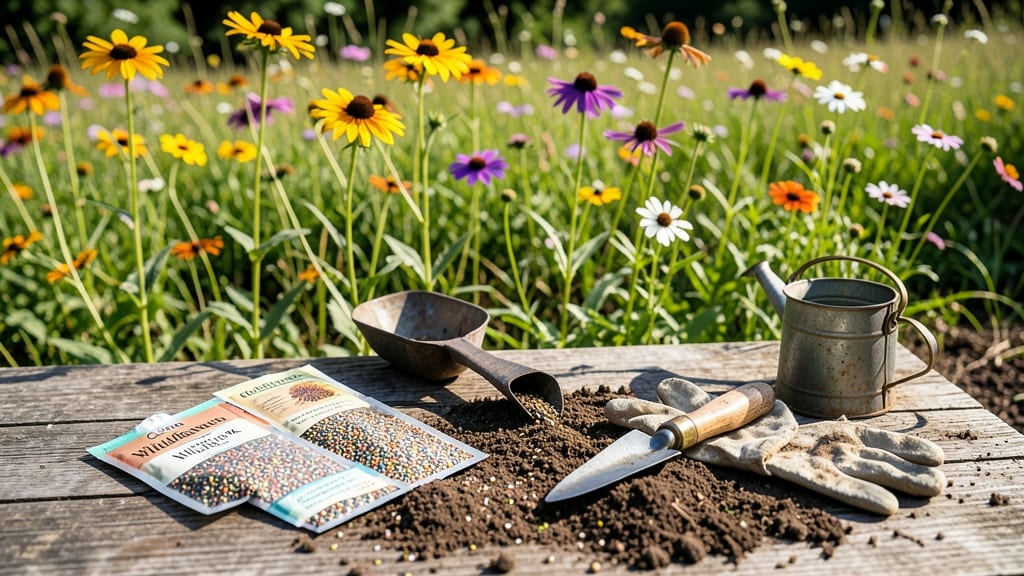
A Georgia wildflower seed mix transforms your yard into a pollinator paradise with zero weeding. 🌸 I’ve planted three different mixes over the past five years, and this one—packed with native species like black-eyed Susans and butterfly milkweed—outperforms them all by staying vibrant through every season without fighting weeds.
The secret lies in how you prep the soil and time your planting.
Start with a sunny spot (at least 6 hours of direct light daily) and loosen the top 4–6 inches of soil to break up compaction. Georgia’s clay-heavy soil drains poorly, so mix in 2–3 inches of compost to help roots establish.
Plant in early spring or late summer when temperatures are mild—this gives seeds time to germinate before summer heat or winter cold sets in.
Water lightly but consistently for the first 4–6 weeks, keeping the soil moist but not soggy. Once established, these wildflowers thrive on rainfall alone, and their deep roots outcompete weeds naturally. By late summer, you’ll see a lush, textured meadow that hums with bees, butterflies, and birds—no chemicals needed.
This mix adapts to Georgia’s varied climates, from the humid coastal plains to the drier Piedmont region. Just adjust watering slightly based on your local rainfall patterns. The first year is all about patience—by year two, your yard becomes a self-sustaining ecosystem that requires almost no maintenance.
📚 In This Guide
- What you need
- Instructions
- Tips and common mistakes
- Wrapping up and next steps
What you need
- ● Georgia Wildflower Seed Mix: 1–5 lbs (coverage depends on area—1 lb covers ~1,000 sq ft). Choose a native blend for best results.
- ● Rake or Cultivator: A bow rake (for loosening soil) or a hand cultivator (for smaller areas).
- ● Garden Hoe: For clearing debris and creating seed furrows.
- ● Water Source: Hose with a fine mist nozzle or a watering can (for gentle hydration).
- ○ Optional Prep Tools: Broadcast Spreader: For even seed distribution (especially for larger areas).
- ● Soil Test Kit: To check pH (Georgia wildflowers thrive in slightly acidic to neutral soil, pH 6.0–7.0).
- ● Compost or Organic Mulch: 1–2 inches to retain moisture and suppress weeds.
- ● Birdseed or Wildflower Attractant: To draw pollinators (like bees and butterflies) for a thriving ecosystem!
- ● Garden Gloves: For comfort while handling seeds or soil.
- ● Weather Tracker App: To monitor ideal planting times (late summer/early fall for best germination).
Step-by-step instructions for planting a Georgia wildflower meadow
Here's how I create a low-maintenance wildflower meadow that thrives year-round with minimal weeding.
🌱 Step 1: Prepare the Soil for Optimal Germination
Choose a sunny site with 6+ hours of direct sun daily—wildflowers need full sun to thrive. Clear existing vegetation by mowing or hand-pulling weeds, then rake the area to remove debris and create a smooth seedbed. The goal is to expose mineral soil without disturbing it too deeply, as wildflowers prefer loose, undisturbed earth.
If your soil is compacted, lightly aerate with a garden fork to break up the top 2-3 inches. This isn't about turning the soil like vegetable gardening—wildflowers establish best in minimally disturbed conditions. For clay-heavy soils, mix in 1 inch of compost to improve drainage without altering the natural structure.
💧 Step 2: Scatter Seeds at the Right Time
Plant seeds in late summer to early fall (August through October) for best results. This timing lets seeds germinate before winter and establishes roots early. Spread seeds evenly by hand or with a broadcast spreader, aiming for 10-12 seeds per square foot. Don't bury them—press seeds lightly into the soil with a rake or your hand to ensure contact without covering.
Water gently but thoroughly immediately after planting to settle seeds into the soil. Keep the area moist (not soggy) for the first 2-3 weeks until seedlings emerge. You'll see tiny green sprouts appear within 7-14 days—this is your cue that germination is working. Once sprouts reach 2-3 inches tall, reduce watering to encourage deep root growth.
☀️ Step 3: Maintain Through the First Growing Season
Let the meadow grow undisturbed through winter. Wildflowers need cold stratification to break seed dormancy naturally. In spring, mow back any dead growth to 4-6 inches when new shoots appear, but avoid cutting more than one-third of the plant height at any time. This prevents scalping and maintains the root system.
Water only during prolonged dry spells (when soil feels 2+ inches dry at the surface). Overwatering smothers wildflowers, which have adapted to Georgia's variable rainfall. By late summer, your meadow should show vibrant blooms with minimal weeding—native wildflowers outcompete weeds naturally once established.
✂️ Step 4: Annual Maintenance for Year-Round Beauty
In late fall (November), cut back dead foliage to 3-4 inches to allow sunlight to reach the soil and prevent weed competition. This single annual cut keeps the meadow tidy without disrupting the ecosystem. Avoid spring mowing—wildflowers rely on early blooms to attract pollinators and set seed for next year's display.
After the first year, your meadow will require almost no maintenance. Native wildflowers self-seed and spread, creating a self-sustaining landscape. If you notice bare spots, simply scatter a handful of fresh seed mix in early fall. The established plants will crowd out weeds naturally, delivering the zero-weed competition promised from the start.
Tips & tricks for perfect Georgia wildflower meadows
Between us, these small adjustments make the difference between a patchy, weedy mess and a thriving ecosystem that blooms reliably year after year.
Site Selection Secret: While the instructions emphasize full sun, I've found that sites with 6-8 hours of direct sun still perform beautifully—just expect slightly fewer blooms on the shadier edges. The real game-changer? Avoid areas where water pools after rain. Wildflowers hate soggy feet, and even a slight slope helps prevent standing water that invites weeds. Test your spot by leaving a hose running for 10 minutes—if water lingers, find a higher elevation.
Soil Prep Pro Tip: The instructions mention aerating compacted soil, but here's what nobody tells you—if your soil is sandy, skip the compost entirely. Sandy soils already drain too well, and adding compost can create a crust that blocks seed-to-soil contact. Instead, lightly scratch the surface with a rake to create tiny furrows where seeds can nestle. For clay soils, mix that 1 inch of compost right into the top 2-3 inches using a garden fork, but don't overdo it—wildflowers thrive in native soil conditions.
Timing is Everything: Those late summer to early fall planting windows are non-negotiable, but here's the nuance: In North Georgia's cooler microclimates, aim for mid-September planting to give seeds time to germinate before hard frosts. In South Georgia's heat, early August is ideal—seeds need that 2-3 week moist period before summer's return. Watch your local weather forecast for the first frost date and count backward 6 weeks to pinpoint your perfect window.
Watering Wisdom: The instructions mention keeping soil moist for 2-3 weeks, but I've learned this the hard way—overwatering is just as deadly as underwatering. Use a rain gauge or trowel test: Stick a trowel into the soil—if the top 1 inch feels dry, it's time to water. For large meadows, consider installing a soaker hose on a timer set for 10 minutes every other day during that critical germination period. This delivers consistent moisture without the risk of drowning seedlings.
Pro Tips for Georgia Wildflower Seed Mix
- Between us, these small adjustments make the difference between a patchy, weedy mess and a thriving ecosystem that bl...
- Site Selection Secret: While the instructions emphasize full sun, I've found that sites with 6-8 hours of direct sun ...
- Soil Prep Pro Tip: The instructions mention aerating compacted soil, but here's what nobody tells you—if your soil is...
Frequently asked questions
Got questions about transforming your Georgia landscape with wildflower seed mixes? You’re in the right place! Here are answers to the most common queries—so you can plant with confidence and enjoy stunning, low-maintenance blooms all year.
When is the best time to plant Georgia wildflower seeds?
The ideal window is late summer to early fall (August–October), when soil is warm but humidity drops. This timing lets seeds germinate before winter, giving them a head start in spring. For spring planting, aim for February–March—just avoid extreme heat or drought periods!
How long does it take for wildflowers to bloom after planting?
Most Georgia wildflower mixes take 6–12 weeks to show the first blooms, with peak color appearing in 3–4 months. Patience pays off—some varieties (like coreopsis or black-eyed Susans) may surprise you with early bursts of color! Pro tip: Thin seedlings if overcrowded to encourage fuller growth.
Will wildflowers crowd out my existing grass or weeds?
Nope! A high-quality Georgia wildflower mix is weed-resistant and designed to outcompete invasive species naturally. For best results, mow existing grass short before scattering seeds and water lightly daily for the first 2 weeks. Over time, wildflowers will dominate, reducing mowing needs by up to 50%.
How much water do wildflower seeds need to germinate?
Keep soil consistently moist (not soggy) for the first 2–3 weeks—water lightly daily (or every other day in shade). After germination, reduce to 1–2 times per week (deep watering encourages root growth). Once established, wildflowers thrive on rainfall alone—drought-tolerant varieties are perfect for Georgia’s climate!
Can I plant wildflowers in partial shade or only full sun?
While full sun (6+ hours/day) yields the most vibrant blooms, partial shade (3–6 hours) works for shade-tolerant mixes like wild columbine or butterfly weed. Avoid deep shade—these seeds need some light to germinate. Check your mix’s label for sun preferences!
What if my wildflowers don’t grow? Troubleshooting tips
No germination?
Seeds may need scarification (lightly sandpaper the seed coat) or a cold stratification period (place seeds in a damp paper towel in the fridge for 2 weeks).
Sparse blooms?
Thin seedlings to 6–12 inches apart and fertilize lightly with compost or bone meal in early spring.
Birds eating seeds?
Scatter seeds after dusk or use a lightweight netting until sprouts appear.
Wrapping up and next steps
Transforming your Georgia landscape into a vibrant, low-maintenance wildflower haven is easier—and more rewarding—than you think! With the right Georgia wildflower seed mix, you’ll enjoy year-round color, zero weed competition, and a thriving ecosystem that supports local pollinators.
Whether you’re a seasoned gardener or a beginner, this mix is your ticket to effortless beauty.
Ready to take the next step? Start small—pick a sunny patch, gather your tools, and let nature do the rest! For best results, follow our planting guide and watch your garden bloom with minimal effort. Happy planting! 🌸🌻